
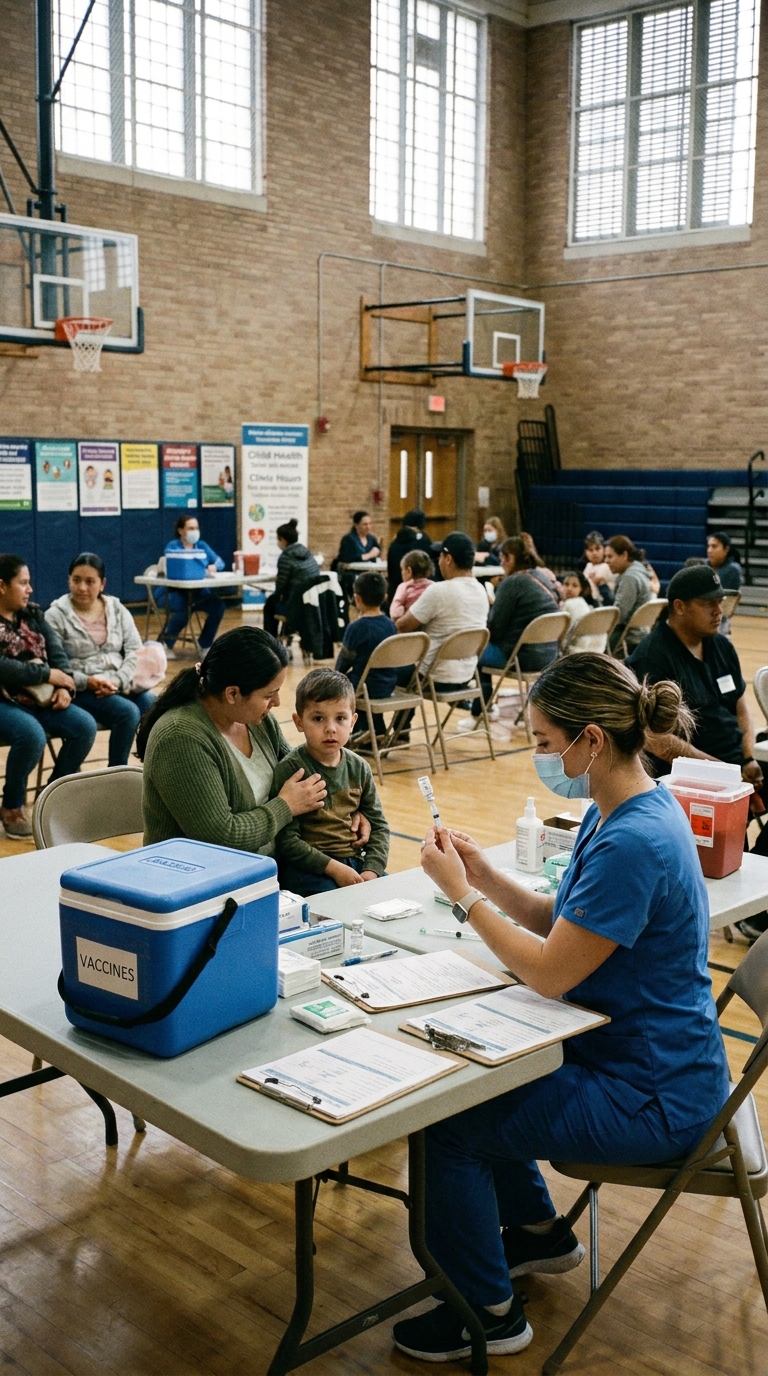
A preventable disease is finding new openings as immunization systems struggle with missed doses, misinformation and disrupted health services.
Measles is often described by doctors in stark terms: one of the most contagious viruses known, capable of spreading through the air long after an infected person has left a room. It is also one of the clearest tests of whether routine public health systems are functioning.
After decades of progress, measles is resurging in parts of the world. The World Health Organization says global immunization efforts have sharply reduced measles deaths since 2000, saving tens of millions of lives. Yet outbreaks continue to appear where vaccination coverage falls below the level needed to stop transmission.
The disease spreads through coughing, sneezing and airborne particles. Early symptoms often resemble common respiratory illness: fever, cough, runny nose and red eyes. A rash follows, but by then the virus may already have spread to others. People who are unvaccinated, under-vaccinated or too young to be vaccinated face the highest risk.
Measles is not harmless. It can cause pneumonia, brain swelling, blindness and death, especially among young children and people with weakened immune systems. Malnutrition and limited access to care increase the danger. In low-resource settings, a delayed diagnosis can turn a preventable infection into a fatal one.
The measles vaccine is highly effective, but it depends on broad coverage. Public health experts generally say communities need very high two-dose coverage to prevent outbreaks. When coverage drops, measles exposes the gaps quickly.
Those gaps have many causes. The COVID-19 pandemic interrupted routine immunization campaigns in many countries. Conflict, migration and political instability have prevented health workers from reaching children. In wealthier countries, vaccine hesitancy and misinformation have contributed to pockets of under-immunization.
The consequences are uneven. A child in a remote rural district may miss vaccination because a clinic lacks cold-chain equipment. A child in a wealthy city may miss it because parents were persuaded by false claims online. The reasons differ, but the epidemiological result can be similar: enough susceptible people for measles to spread.
Health officials say the response must begin with trust. Campaigns that simply repeat scientific facts may fail if communities distrust authorities. Successful vaccination drives often rely on local health workers, religious leaders, teachers and parents who can answer questions in familiar language.
Surveillance is equally important. Because measles spreads so quickly, suspected cases must be identified, tested and isolated rapidly. Contact tracing and targeted vaccination can stop small clusters from becoming large outbreaks.
Schools are a key front line. In many countries, school-entry vaccine requirements have helped maintain coverage. But exemptions, poor recordkeeping and uneven enforcement can weaken protection. Public health officials say accurate local data matter because national averages may hide vulnerable neighborhoods.
The return of measles also signals a broader warning. Routine immunization systems protect against many diseases, not just measles. When one vaccine-preventable disease resurges, it may indicate wider weaknesses in primary care, supply chains and public confidence.
The stakes extend beyond children. Infants too young for vaccination depend on herd protection. Cancer patients, transplant recipients and others with compromised immunity may not respond fully to vaccines and rely on surrounding communities to reduce exposure.
Measles outbreaks are expensive as well as dangerous. Each case can require urgent testing, isolation, contact tracing and emergency vaccination. Hospitals may need to separate contagious patients, while schools and workplaces face disruptions.
The solution is known but politically demanding: restore routine immunization, close local coverage gaps, counter misinformation without stigmatizing hesitant families, and protect vaccine supply chains from disruption. Health systems must reach children before outbreaks begin, not only after emergency headlines appear.
Measles was never gone everywhere. But its return in places that once controlled it is a reminder that public health victories require maintenance. The virus needs only a small opening. Vaccination systems must be strong enough not to give it one.
“””
