The new rooftop dining and nightlife venue at National Gallery Singapore is turning familiar local flavours into a polished all-day experience, from refined plates to late-night drinks.
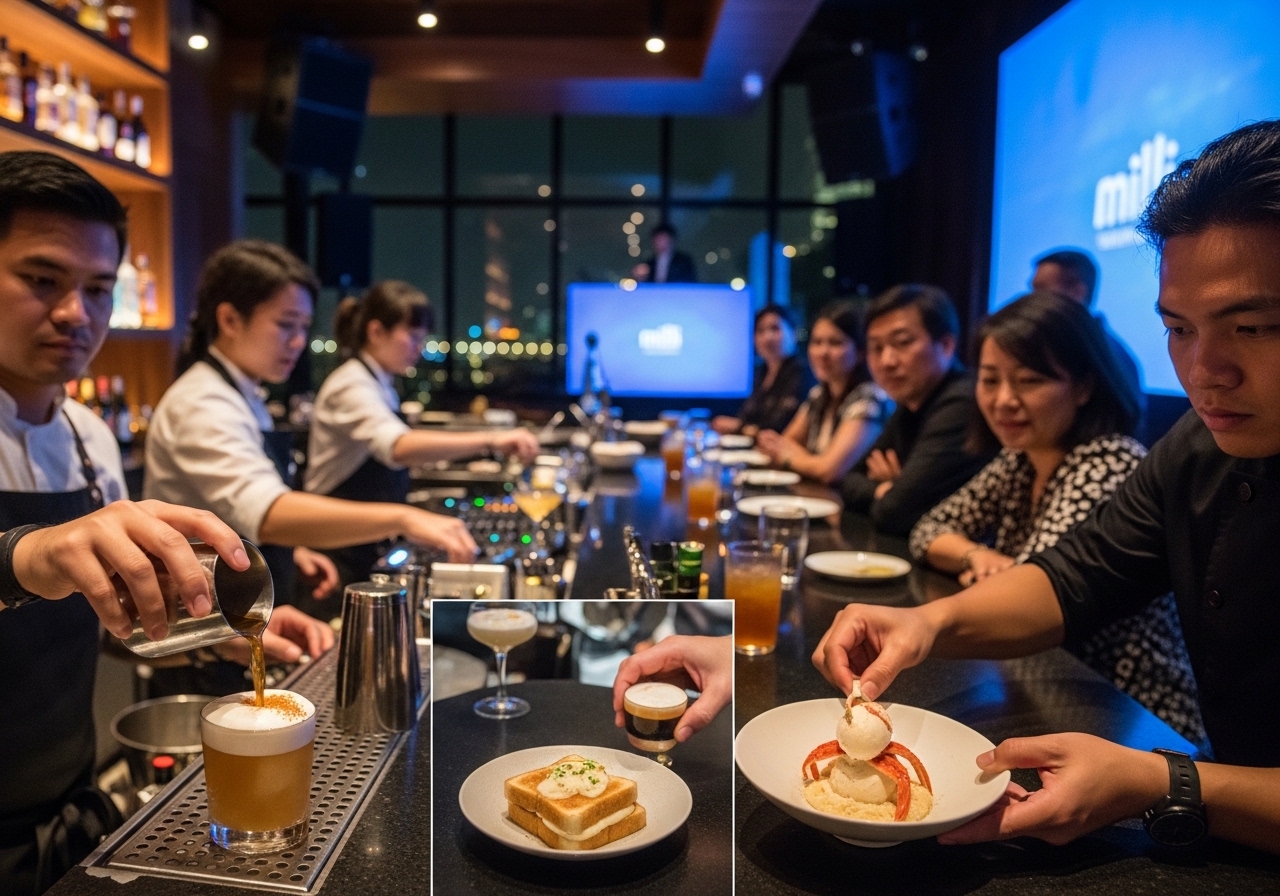
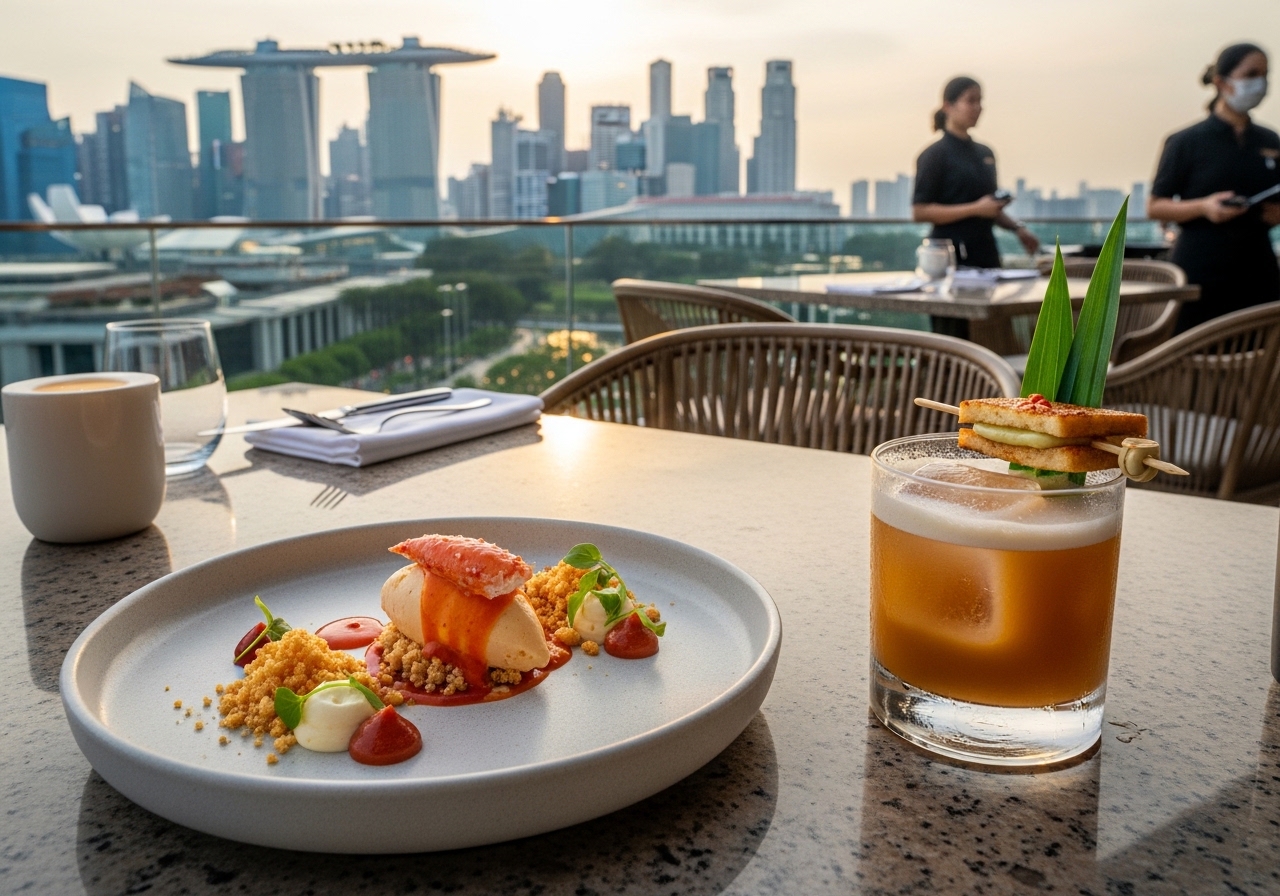
SINGAPORE — A new rooftop venue at National Gallery Singapore is drawing attention before its official opening with two items that sound almost engineered to start a conversation: chilli crab ice cream and a kaya toast-inspired cocktail.
Milli, a two-storey dining, bar and nightlife destination scheduled to open on May 31, is being positioned as a contemporary expression of Singaporean taste, memory and entertainment. Its creators are not simply offering another skyline bar or restaurant with a view. They are attempting to translate some of the country’s most recognizable culinary references into a format that can move from lunch to sunset drinks, dinner, late-night snacks and club music.
The most eye-catching dishes and drinks show how direct that ambition is. Chilli crab ice cream, associated with chef LG Han’s long-running interest in reinterpreting Singaporean flavours, places one of the country’s most famous seafood dishes into the language of dessert and fine-dining technique. The kaya toast cocktail, described in local coverage as “The Singaporean Breakfast,” turns the familiar pairing of kaya, coffee and coconut into an alcoholic drink, reportedly using kaya, coconut milk, rum and espresso in a slushie-style serve.
Both items sit at the intersection of nostalgia and provocation. Chilli crab is usually eaten hot, messy and communal, with sweet-spicy tomato-chilli sauce clinging to shell and fried mantou. Kaya toast, by contrast, belongs to the morning ritual of kopitiams, with crisp bread, coconut jam, butter, eggs and coffee. Milli’s early publicity suggests the venue wants to take flavours that Singaporeans know intimately and place them in settings where they become theatrical, photogenic and newly debatable.
That strategy is not accidental. Milli is led by a group that combines nightlife operators with culinary and cocktail figures who carry serious local credibility. The project brings together members of the team behind Bae’s Cocktail Club, chef Han Li Guang of the Michelin-starred modern Singaporean restaurant Labyrinth, and bartender Vijay Mudaliar, known internationally for Native. On its own website, Milli says its culinary and cocktail programme draws deeply from Singapore’s culinary heritage while looking “beyond the horizon.”
The venue’s location gives that idea a highly visible stage. Milli occupies the upper levels of National Gallery Singapore, one of the city’s most prominent cultural institutions. Level six is planned as Milli Sky Dining & Bar, a calmer rooftop setting for food, cocktails and city views. Level five is designed as Milli Lounge, a higher-energy nightlife space with music running late into the night. The concept is meant to shift across moods: civic landmark by day, dining destination by sunset, party venue after dark.
In Singapore, where food culture is deeply tied to identity, such reinterpretations can invite admiration and skepticism at the same time. A dish like chilli crab ice cream is almost guaranteed to divide opinion before it is tasted. To some diners, it may represent creativity and confidence: a chef treating local food with the same conceptual freedom often granted to European or Japanese ingredients. To others, it risks sounding like novelty for novelty’s sake, an Instagram-era gesture designed to shock rather than satisfy.
The answer will depend on execution. Singaporean diners are used to innovation, but they are also demanding when familiar flavours are involved. A chilli crab-inspired item cannot merely borrow the name. It must carry the balance of sweetness, acidity, chilli heat, seafood depth and richness that makes the original recognizable. A kaya toast cocktail must do more than taste generically of coconut or coffee. It needs to capture the buttery, aromatic and slightly salty comfort of the breakfast set without becoming heavy or gimmicky.
Milli’s advantage is that its key collaborators have built reputations around precisely this kind of translation. Han’s Labyrinth is known for reworking Singaporean dishes through fine-dining structure and storytelling. Mudaliar’s Native has focused on regional ingredients, fermentation, local produce and cocktails rooted in place rather than imported formulas. Their participation signals that the new venue is not treating local flavour simply as decoration.
The broader significance of Milli lies in how it reflects a shift in Singapore’s dining and nightlife economy. For years, the city has had world-class restaurants, sophisticated cocktail bars and high-energy clubs, but those experiences were often separated by venue type, price point or audience. Milli is trying to collapse those boundaries. It wants to be a place for a set lunch, a sunset drink, a serious dinner, a late-night snack and a dance-floor crowd.
That makes the menu especially important. Food in nightlife venues is often treated as secondary, while cocktails in restaurants can feel like an afterthought. Milli’s founders appear to be betting that younger diners and travelers increasingly want hybrid spaces where the quality of food, drinks, music and design is consistent across the night. In a city where rent, staffing and construction costs remain significant pressures on hospitality operators, a venue that can operate across more hours and occasions may also make better commercial sense.
The menu preview suggests a deliberate mix of accessibility and ambition. Reports have cited dishes such as oyster omelette done soufflé-style, lobster laksa cheong fun, roasted spring chicken rice paella, steamed king crab and late-night snacks including prata pizza, goreng pisang skewers and ice cream pandan waffles. These are not neutral international dishes. They are references to hawker centres, home cooking, kopitiams, seafood restaurants and shared local memory.
The cocktails follow the same pattern. The namesake Milli is reportedly inspired by the Million Dollar Cocktail, a lesser-known drink linked to Ngiam Tong Boon, the bartender associated with the Singapore Sling. Other drinks, including Peranakan Spritz and The Singaporean Breakfast, point toward a programme built around local and regional markers rather than generic luxury-bar signatures. That gives the drinks an immediate narrative advantage: they can be explained in a sentence, photographed easily and understood by locals and visitors in different ways.
For tourists, chilli crab ice cream and a kaya toast cocktail may operate as playful entry points into Singaporean food culture. For locals, they may function more as tests of memory and authenticity. The same dish can be read as creative homage or over-designed spectacle depending on whether it delivers the emotional satisfaction of the original reference.
This is the risk and reward of building a venue around “nostalgia remixed,” a phrase Milli uses to describe part of its concept. Nostalgia is powerful because it is shared, but it is also personal. People remember kaya toast from specific kopitiams, childhood routines, school mornings or family breakfasts. They remember chilli crab from birthdays, visitors from abroad, messy tables and seafood restaurants by the water. Reworking those foods means entering a space where taste is tied to biography.
Milli is also opening at a moment when Singapore’s hospitality scene is increasingly comfortable presenting local identity in polished global formats. The city’s best-known restaurants and bars no longer need to mimic European fine dining or Western cocktail culture to be taken seriously. Instead, many are drawing authority from local ingredients, hawker traditions, regional produce, dialect foodways and Southeast Asian technique. Milli appears to be extending that movement into a more entertainment-driven environment.
The National Gallery location adds another layer. A venue inside or atop a major art institution carries expectations beyond ordinary nightlife. It sits near civic history, tourism flows, cultural programming and the downtown skyline. By putting chilli crab ice cream and kaya toast cocktails in that setting, Milli is effectively placing everyday Singaporean flavours into a more formal symbolic frame. The message is clear: these tastes are not just comfort food or tourist checklist items. They are cultural material that can be reworked, staged and debated.
Whether Milli becomes a lasting destination will depend less on the surprise of its menu names than on consistency after opening. Viral dishes can drive first visits, but repeat business requires service, pricing, atmosphere, music programming, food quality and a sense that the concept works beyond its opening headlines. The venue’s promise of two levels and multiple moods gives it room to evolve, but also creates operational complexity.
For now, however, the chilli crab ice cream and kaya toast cocktail have done what opening signatures are supposed to do. They have made Milli legible before the doors open. They tell diners that this will be a venue built around Singaporean references rather than anonymous international luxury. They signal playfulness, confidence and a willingness to risk debate.
In a city where food is both daily pleasure and national language, that is no small move. Milli is not merely asking whether chilli crab can become ice cream or kaya toast can become a cocktail. It is asking whether familiar flavours can be lifted into new nightlife rituals without losing the emotional charge that made them familiar in the first place.