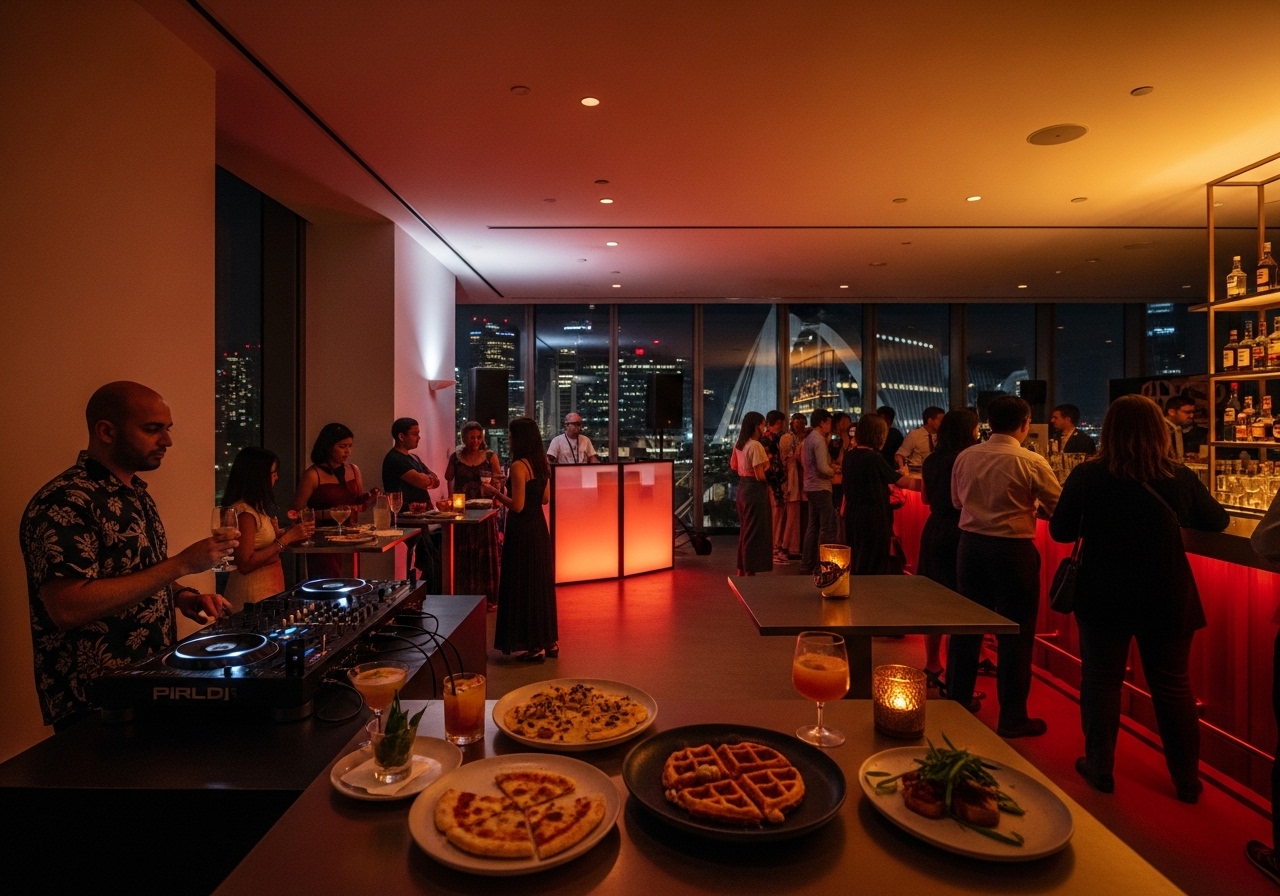
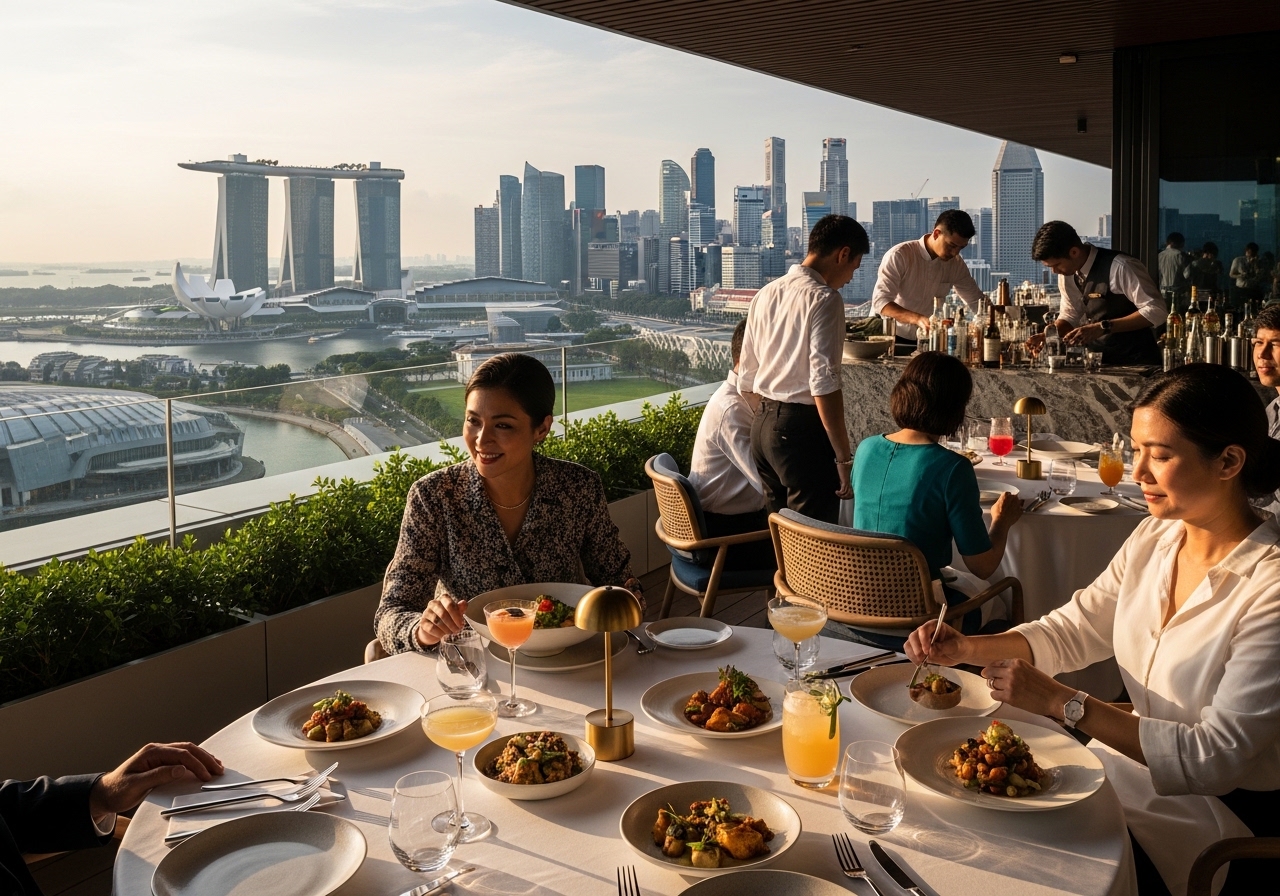
The new two-level concept brings together chef LG Han, bartender Vijay Mudaliar and Singapore nightlife operators in a bid to turn local memory into an all-day dining, cocktail and entertainment destination.
SINGAPORE — A new restaurant, bar and nightlife concept is preparing to open at National Gallery Singapore, bringing together some of the city’s most recognizable names in contemporary dining and cocktails for a project built around nostalgia, rooftop views and the evolving rituals of Singapore social life.
Milli, scheduled to open on May 31, will occupy two levels of the museum complex, with Milli: Sky Dining & Bar on the upper floor and rooftop space, and Milli: Lounge below. The concept, reported by CNA Lifestyle and supported by details on Milli’s own website, positions itself as more than a restaurant and more than a club. It is being framed as a full-day destination where guests can arrive for lunch, stay for cocktails, move into dinner and continue into late-night music.
The team behind the project gives Milli immediate credibility in Singapore’s crowded food and beverage scene. It involves Han Liguang, widely known as LG Han, chef-owner of Michelin-starred Labyrinth; Vijay Mudaliar, co-founder of the acclaimed cocktail bar Native; and the team behind Bae’s Cocktail Club and The Proper Concepts Collective. The collaboration brings together three forces that have shaped different parts of Singapore’s hospitality identity: modern Singaporean cuisine, locality-driven cocktails and nightlife that leans into social energy rather than stiff formality.
The restaurant’s name is drawn from “millennium,” according to CNA Lifestyle, a reference to time, transformation and generational change. That idea sits at the heart of the concept. Milli is designed around familiar Singaporean flavours, sounds and social memories, but not as a museum of nostalgia. Its stated ambition is to reinterpret those memories for a new generation of diners who expect food, drinks, music and atmosphere to exist in the same experience.
That ambition is particularly suited to its location. National Gallery Singapore is already one of the country’s most symbolically loaded cultural spaces, housed in the former Supreme Court and City Hall buildings. It is a museum of art, history, civic memory and national identity. Placing a nostalgia-driven dining and nightlife concept on its rooftop creates an obvious tension, but also an opportunity: the city’s past below, its skyline beyond, and its contemporary dining culture unfolding across the table.
Milli: Sky Dining & Bar will occupy the rooftop level, offering the more refined side of the concept. The official site describes it as an intimate setting where LG Han and Vijay Mudaliar present a forward-looking expression of Singaporean cuisine and cocktails against the city skyline. The draw is not only the food but the vantage point. Rooftop dining in Singapore has often been associated with imported luxury aesthetics — international menus, skyline cocktails and polished but interchangeable ambience. Milli appears to be taking a more local route, using the view as a frame for dishes and drinks tied to Singapore memory.
The menu details reported so far suggest a deliberate mix of playfulness and technical control. CNA Lifestyle highlighted dishes such as Han’s signature Chilli Crab Ice Cream, Roasted Spring Chicken Rice Paella, souffle-style oyster omelette and late-night snacks including prata pizza, goreng pisang skewers and ice cream pandan waffles. The Straits Times also reported dishes such as Lobster Laksa Cheong Fun, Whole Grilled Cod Head with Assam Curry Beurre Blanc and Dry-aged Tomahawk with Hainanese-style black pepper sauce.
These dishes point to a style that has become familiar in Singapore’s modern dining scene: recognizable local references reworked through global technique. The danger of such cooking is that it can become gimmicky, relying on the shock of a famous hawker flavour appearing in an unexpected form. Han’s involvement may help Milli avoid that trap. At Labyrinth, he built a reputation around reimagining Singaporean food with precision and narrative, treating dishes not simply as clever reinventions but as vessels for memory, place and personal history. Milli appears to bring that sensibility into a looser, more accessible setting.
Accessibility will be important. CNA reported that lunch starts from S$38 for a two-course set, with additional a la carte items available. That price point places Milli below fine dining but above casual eating, a space increasingly important in Singapore as diners look for experiences that feel special without requiring the ceremony or cost of a tasting menu. The planned sunset high tea, expected later, suggests the operators are thinking in dayparts rather than fixed meal categories.
The cocktail programme is equally central. Vijay Mudaliar’s Native became known for drinks rooted in regional produce, fermentation and a strong sense of place. At Milli, the drinks are expected to continue that local language, but in a more entertainment-driven environment. CNA described examples such as kaya toast cocktails, while the broader concept promises drinks that draw from flavours Singaporeans grew up with. In the hands of a less disciplined bar team, nostalgia cocktails can easily become sweet novelty. Mudaliar’s reputation suggests Milli will aim for something sharper: drinks that are fun but still structurally serious.
Below the rooftop, Milli: Lounge will provide the late-night half of the project. The venue’s website describes it as a high-energy club lounge shaped by sounds Singaporeans have danced and sung along to across generations, from pop and disco funk to hip hop and R&B. The phrase “nostalgia remixed” is central to the lounge’s identity. It suggests that Milli is not only using food and drink to trigger memory, but also music — the most immediate and communal form of nostalgia.
That is a smart move in a city where nightlife has changed dramatically. Singapore’s club and bar scene has been reshaped by rising rents, changing youth habits, stricter cost pressures and the post-pandemic reordering of social life. Many venues now need to be more than one thing to survive: a restaurant, a bar, a music venue, a private-event space and a late-night hangout. Milli’s two-level format reflects that reality. It is not asking guests to choose between dinner and nightlife. It is trying to remove the boundary.
The project also reflects a broader trend in Asian urban hospitality: the rise of hybrid venues that combine food, cocktails, design and entertainment into a single destination. Diners no longer necessarily see dinner as ending when the plates are cleared. They may want to move from meal to drinks to music without changing buildings. For operators, that creates opportunities for longer dwell time and stronger revenue across the day. For guests, it offers convenience and continuity.
Milli’s challenge will be coherence. A venue that tries to be lunch spot, rooftop restaurant, cocktail bar, supper destination and club can easily feel unfocused. The strongest hospitality concepts have a clear emotional logic. Milli’s logic appears to be Singaporean memory — the foods, songs, rituals and flavours that connect people across generations. If that thread remains visible, the concept may feel expansive rather than scattered.
The setting will help. From National Gallery Singapore, guests can look toward the Padang, Marina Bay and the civic district, a view dense with national symbolism. It is difficult to imagine a more fitting backdrop for a concept built around Singapore’s past and future. A plate of reinterpreted chicken rice, a kaya-inspired cocktail or a late-night set of throwback anthems will carry a different charge when framed by the city’s historic core.
There are commercial stakes as well. National Gallery Singapore already hosts notable dining names, and its food and beverage mix plays an important role in drawing visitors beyond exhibitions. Milli adds a stronger nightlife element, potentially extending the building’s relevance into later hours. That could help the Gallery attract a wider audience, including younger locals who might not otherwise see the museum as a night-out destination.
The involvement of established operators also signals confidence in Singapore’s premium lifestyle market. Despite economic caution and rising costs, the city continues to support ambitious dining and bar concepts when they offer a strong point of view. Milli’s point of view is not merely luxury. It is locality, memory and performance — a combination that fits Singapore’s current hospitality moment.
Still, expectations will be high. A collaboration involving Han and Mudaliar will be judged not only on atmosphere but on execution. The food must be more than clever references. The cocktails must be more than nostalgic sweetness. The lounge must feel energetic without becoming generic. The rooftop must make good use of one of Singapore’s most valuable views.
If Milli succeeds, it could become an important model for how Singapore dining evolves in the late 2020s. Rather than separating fine dining, bar craft and nightlife into different silos, it attempts to bring them together under a distinctly local identity. That makes the concept ambitious, but also timely.
Singapore has spent years proving that its food culture can be both traditional and experimental. Milli’s opening at National Gallery Singapore takes that argument into a new setting: a rooftop above a national art museum, where the city’s flavours, music and social rituals are being repackaged for a generation that wants memory with movement.
The result may be a venue that looks backward and forward at the same time. That is the promise of Milli: nostalgia not as retreat, but as raw material for the next version of Singapore dining and nightlife.