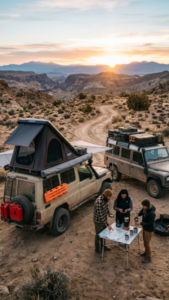
From remote trails to suburban driveways, a once-niche form of vehicle travel is reshaping how carmakers, consumers and tourism operators think about freedom, capability and the modern utility vehicle.
The rise of overlanding and adventure SUVs has become one of the most visible shifts in the global auto market, blending outdoor lifestyle culture with the enduring commercial power of the sport utility vehicle. Once associated mainly with specialist off-road enthusiasts, overlanding has moved closer to the mainstream, drawing in families, young professionals, retired travelers and content creators who see the vehicle not just as transportation, but as a self-contained platform for exploration. The result is a growing market for SUVs designed or marketed around rugged capability, long-distance travel and outdoor living.
At its core, overlanding is less about speed than endurance. It emphasizes self-reliant travel to remote destinations, often over rough terrain, with a focus on camping, navigation, recovery equipment and the ability to remain away from services for extended periods. Unlike traditional off-roading, which may revolve around technical obstacles or recreational trail driving, overlanding is usually tied to longer journeys and the practical demands of carrying gear, food, water and shelter. That distinction has helped broaden its appeal. For many buyers, the attraction lies not in extreme driving, but in the promise of independence.
Automakers have responded quickly. Vehicles once sold mainly on family practicality or urban prestige are now frequently promoted with imagery of mountain passes, desert campsites and roof tents under starry skies. Manufacturers have invested in factory-developed off-road trims with higher ground clearance, locking differentials, skid plates, all-terrain tires and suspension systems designed for rougher use. Some models also feature integrated drive modes, onboard power supplies, washable interiors and accessory systems that make it easier to fit racks, storage drawers, lighting and camping equipment. In effect, the SUV has become both transportation product and lifestyle statement.
The commercial logic is straightforward. Adventure-oriented variants help manufacturers command higher prices in a competitive market where basic transport has become less profitable. Buyers are often willing to pay a premium for rugged styling and the perception of capability, even if only a portion of them will regularly travel deep into remote terrain. That has created a powerful blend of aspiration and utility. A vehicle that looks ready for the wilderness may spend most of its life commuting, but it still offers the owner a story about possibility. In the modern car business, that emotional value matters almost as much as the mechanical specification.
Few segments illustrate this better than body-on-frame SUVs and off-road focused crossovers. Traditional names long associated with durability and rough-country travel have regained renewed cultural relevance, while new entries have been introduced to capture rising interest in adventure travel. Vehicles such as the Jeep Wrangler, Ford Bronco, Toyota Land Cruiser and various off-road pickup-based SUVs have benefited from this appetite, while even unibody crossovers are being adapted with more rugged trims. Carmakers are careful to distinguish between true off-road engineering and appearance packages, but the overlap between the two has become part of the market strategy.
The boom has also supported an ecosystem of suppliers. Rooftop tents, awnings, portable refrigerators, traction boards, air compressors, auxiliary fuel containers, solar charging kits and modular storage systems are now widely marketed to a consumer base that extends well beyond hard-core expedition travelers. Retailers and specialist builders offer suspension upgrades, wheel-and-tire packages, steel bumpers, winches and integrated camp kitchens. Social media has amplified the trend by turning vehicle travel into a visual narrative, where equipment and landscape become part of a curated identity. A carefully photographed campsite beside a rugged SUV can function both as travel memory and as advertising.
Yet beneath the imagery, practical questions are shaping the segment’s future. Weight is one of the most important. As owners add tents, armor, extra wheels, water tanks and cargo systems, many vehicles approach or exceed comfortable load limits. That can compromise braking, handling, tire wear and fuel economy. Industry experts have repeatedly warned that adventure modifications should be matched to the vehicle’s engineering limits, not just to aesthetic preference. The most capable-looking SUV is not always the safest when heavily loaded for a long journey over mixed terrain.
Fuel consumption is another concern. Large, boxy vehicles fitted with off-road equipment are rarely efficient, and the addition of roof-mounted accessories can further increase aerodynamic drag. At a time when consumers and regulators are paying more attention to emissions, the adventure SUV presents an awkward contradiction: it celebrates access to nature while often relying on vehicles that consume more resources than smaller alternatives. Automakers are now exploring ways to narrow that gap. Hybrid powertrains, more efficient engines and electric accessories are beginning to appear in some models, though fully electric overlanding remains a more complicated proposition.
Electric adventure vehicles have clear strengths, including instant torque, quieter travel and the possibility of powering campsite equipment directly from the vehicle’s battery. But they also face constraints that matter deeply in remote travel: charging availability, range loss in harsh weather, added weight and uncertainty about energy planning far from infrastructure. For urban consumers who want the adventure image with occasional weekend use, electrified SUVs may be increasingly attractive. For drivers planning long unsupported journeys in remote areas, conventional internal combustion and hybrid systems still offer a degree of logistical confidence that battery-only models are working to match.
The popularity of overlanding has also brought environmental and cultural scrutiny. Conservation groups and land managers have warned that rising traffic in fragile landscapes can lead to erosion, habitat disturbance, litter and pressure on local communities. Routes shared online can quickly become overcrowded, turning once-quiet destinations into heavily visited hotspots. Responsible travel principles, including staying on designated trails, respecting local rules, minimizing camp impact and supporting nearby communities, are becoming central to the public conversation. In that sense, the future of the segment may depend not only on what vehicles can do, but on how responsibly their owners use them.
Tourism operators and rural businesses, meanwhile, have seen opportunity. Adventure travel has helped generate demand for campgrounds, gear rentals, guided routes, vehicle preparation services and hospitality in areas outside traditional city-based tourism circuits. For some regions, especially those with strong landscapes and road-trip culture, the adventure SUV has become part of a broader visitor economy. Weekend travelers may buy fuel, food, lodging and repair services in small towns that benefit from increased movement. That economic boost can be meaningful, though it can also create tensions over crowding, access and the preservation of local character.
Safety remains a critical issue. Many SUVs marketed for adventure use include sophisticated terrain systems that can create confidence, but they do not eliminate the risks of difficult conditions, weather changes, isolation or driver inexperience. Recovery training, route planning, communication equipment and knowledge of vehicle limitations are just as important as horsepower or wheel articulation. Search and rescue teams in several countries have repeatedly highlighted that modern off-road technology can encourage people into environments that still demand judgment and preparation. The adventure SUV may be highly capable, but it is not immune to poor decisions.
For the auto industry, the strength of the segment lies in its flexibility. Adventure-oriented SUVs can be sold as authentic expedition tools, premium lifestyle goods or versatile family vehicles with extra credibility. They appeal to consumers who want function, status and emotional escape in a single purchase. That makes them especially resilient in a market where many buyers are trying to justify high vehicle prices by seeking products that do more than one job. An SUV that can commute during the week and carry camping gear on weekends offers a narrative of value beyond simple transportation.
There is also a broader cultural force at work. In an era shaped by digital overload, remote work and dense urban routines, overlanding represents a form of controlled disconnection. It promises autonomy without complete abandonment of comfort, adventure without total uncertainty. The SUV, equipped with navigation, safety systems and climate control, becomes a bridge between modern convenience and the older idea of the open road. That combination helps explain why the trend resonates so strongly, even among people who may never cross a desert or remote mountain range.
The challenge for manufacturers will be balancing authenticity with excess. Consumers are becoming more discerning about which vehicles are genuinely engineered for long-distance rough travel and which simply wear the design language of adventure. At the same time, pressure will grow for cleaner powertrains, better efficiency and more transparent messaging about safe and responsible use. The overlanding boom is unlikely to disappear soon, but it will evolve. Vehicles that combine rugged credibility with smarter energy use, sensible payload management and real-world practicality are likely to be best placed for the next phase of the market.
For now, overlanding and adventure SUVs occupy a powerful place in the public imagination. They symbolize capability, escape and the enduring appeal of self-directed travel. Whether crossing remote terrain or waiting in a suburban driveway for the next weekend trip, they reflect a changing relationship between consumers and cars. In a crowded automotive marketplace, that promise of mobility, identity and possibility has become one of the industry’s most valuable assets.