The French sprinter delivered his second win in three stages after a late catch of the breakaway, while Uruguay’s Guillermo Thomas Silva held the overall lead as the race prepared to leave Bulgaria for Italy.
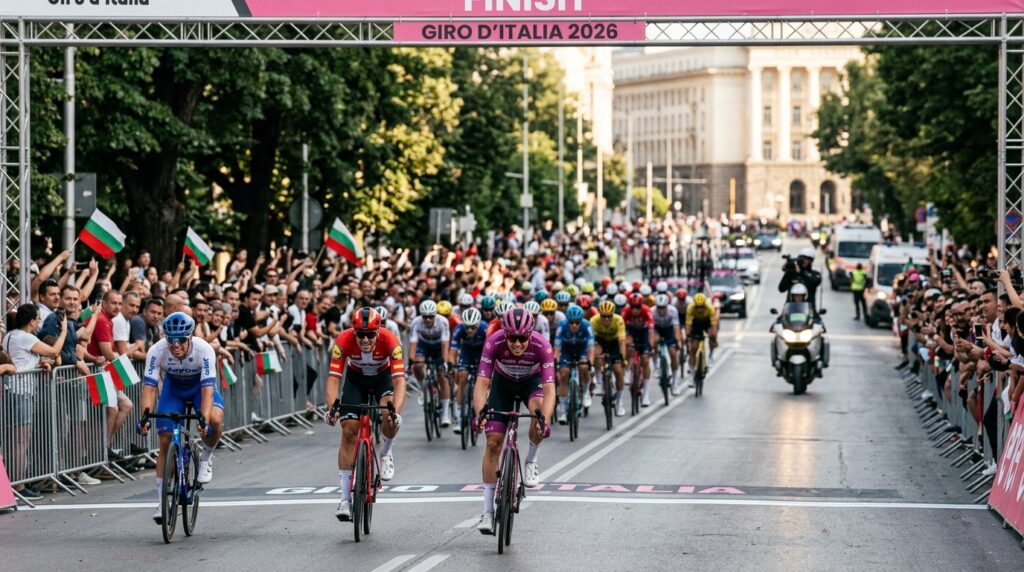
SOFIA, Bulgaria — Paul Magnier confirmed himself as the dominant sprinter of the opening days of the 2026 Giro d’Italia on Sunday, winning Stage 3 from Plovdiv to Sofia in a tight finish that underlined both his speed and his growing composure in Grand Tour racing.
The Soudal Quick-Step rider edged Jonathan Milan of Lidl-Trek at the end of the 175-kilometer route, with Dylan Groenewegen of Unibet Rose Rockets taking third after another tense sprint finale in the Bulgarian capital. The victory was Magnier’s second of the race after his Stage 1 win in Burgas and gave the Frenchman control of the points competition at an early but already telling point in the Giro.
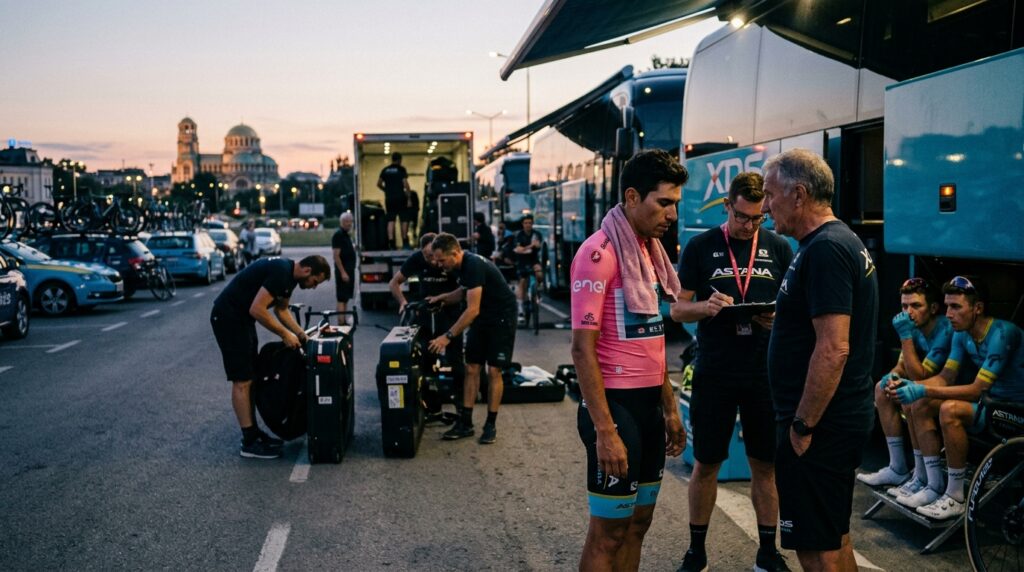
Guillermo Thomas Silva of XDS Astana Team, the Uruguayan rider who had taken the Maglia Rosa on Stage 2, finished safely in the peloton and retained the overall lead. The official standings listed Silva at 13 hours, 10 minutes and 5 seconds after three stages, four seconds ahead of Florian Stork and Egan Bernal. Silva also held the white jersey as the best young rider, adding further weight to one of the early surprises of the race.
Stage 3 was the Giro’s final day in Bulgaria, closing an opening block that had given the race unusual scenery, large roadside crowds and an unpredictable sporting tone. The route began in Plovdiv, one of Europe’s oldest cities, and moved west toward Sofia after crossing the Borovets Pass, a second-category climb that offered the day’s main obstacle before the long descent and flat run-in to the capital.
The stage was expected to favor the sprinters, but it was far from routine. A three-man breakaway involving Diego Pablo Sevilla, Alessandro Tonelli and Manuele Tarozzi animated the day from the opening kilometers. Sevilla, already active in the mountains competition, used the move to strengthen his hold on the blue jersey, while the trio forced the peloton to work harder than many teams may have preferred before the race’s first rest day.
For much of the afternoon, the break appeared under control. The gap rose, then slowly narrowed as the sprinters’ teams took responsibility on the front of the bunch. But the long downhill approach toward Sofia gave the escapees enough momentum to keep hope alive deep into the finale. The peloton did not bring them back until roughly 500 meters from the finish, leaving little time for the sprint trains to organize and raising the possibility of a disrupted, improvised charge to the line.
Milan, one of the most powerful sprinters in the race and a major Italian hope, launched first with Magnier on his wheel. Groenewegen followed closely, waiting for space to open. In the final meters, Magnier came around Milan and threw his bike at the line, taking a narrow win after a finish close enough to require careful confirmation. The result gave Soudal Quick-Step another major early success and left Milan still searching for a stage victory despite twice being in contention.
Magnier’s rise has been one of the main stories of the Giro’s opening weekend. At 22, he has already shown the ability to handle the physical chaos and tactical pressure of Grand Tour sprinting. Winning once can be explained by timing, positioning or circumstances. Winning twice in three stages suggests something deeper: a rider with elite acceleration, a team committed to him, and the confidence to challenge the most established fast men in the peloton.
The Frenchman began the day wearing the Maglia Ciclamino as leader of the points classification and strengthened that position in Sofia. His early command of the sprint competition does not guarantee anything over three weeks, particularly as the route turns toward hillier and mountainous terrain, but it gives him a valuable platform. In a race where pure sprint opportunities are limited, every fast finish carries added importance.
For Milan, the result was another near miss. The Lidl-Trek rider had the strength to open the sprint, but his timing left him exposed. In a long, slightly bending finish after a late catch, launching too early can be costly. Milan still has the speed to win stages later in the race, but the Bulgarian block ended with Magnier holding the advantage in their direct rivalry.
Groenewegen’s third place showed that the Dutch sprinter remains a factor, although he too will know that Sofia represented a chance. The narrow margins among the top three reflected the compressed nature of the finale. The breakaway’s resistance, the late chase and the rush to establish position all meant that the sprint was less controlled than many teams would have wanted.
Behind the stage battle, the general classification remained stable. Silva’s safe finish ensured that the Maglia Rosa would travel with him into the rest day. His lead is slender, but the symbolism is considerable. A Uruguayan rider in pink after the opening weekend is a striking image for a race often shaped by European powerhouses and established Grand Tour contenders.
Silva’s task now changes. Winning or taking the lead through opportunism is one challenge; defending the jersey against experienced contenders is another. Riders such as Bernal, Thymen Arensman, Giulio Ciccone and Jonas Vingegaard remain close enough to apply pressure as soon as the road begins to rise. The coming Italian stages will test whether Silva can remain a story of the first week or become something more durable.
The Giro’s first three days also carried a broader significance for the race itself. Starting in Bulgaria expanded the event’s international reach and placed the peloton on roads less familiar to many riders. The opening stages mixed sprint chances, crashes, rolling terrain and unexpected attacks, creating an early volatility that made the rest day feel unusually welcome.
For teams with general classification ambitions, the main objective on Stage 3 was survival. The finish in Sofia did not produce meaningful time gaps among the overall contenders, but the stage still demanded concentration. A flat finale after a descent can be nervous, especially when sprint trains, breakaway riders and GC teams all fight for road space in the final kilometers.
The race now moves to Italy, where Stage 4 from Catanzaro to Cosenza begins the next phase. The transfer marks a reset, but not a pause in pressure. The first mountain tests are approaching, and the riders who stayed quiet in Bulgaria will soon have opportunities to attack.
For Magnier, the departure from Bulgaria comes with two stage wins, the points jersey and a sharpened reputation. He entered the Giro as one of several sprinters capable of winning; he leaves the opening block as the fastest finisher of the race so far. For Silva, the rest day brings the privilege and burden of pink. For the Giro, the first weekend has already delivered what Grand Tours depend on: surprise, tension and the sense that the race can shift quickly from one storyline to the next.
The road to Rome remains long, and the opening stages rarely decide the Giro. But they can define its early rhythm. In Sofia, Magnier gave the race another image to remember: a young French sprinter in cyclamen, surging past one of the sport’s most powerful finishers, while a Uruguayan in pink prepared to carry the lead into Italy.
“””