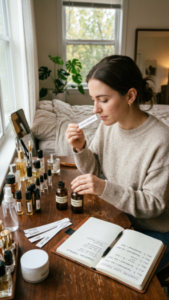
As consumers move beyond the idea of one signature perfume, layered scents are becoming a daily tool for identity, mood and self-expression.
The modern fragrance ritual is no longer limited to choosing one bottle from a dresser and wearing it until it becomes part of a person’s identity. A new generation of consumers is treating scent more like a wardrobe: layered, seasonal, emotional and adaptable. One fragrance may be used for work, another for evening, a body mist for comfort, a perfume oil for intimacy and a niche bottle for occasions when the wearer wants to feel impossible to copy. The result is a fast-growing lifestyle trend built around a simple promise: create a scent that belongs only to you.
Pinterest Predicts 2026 has given this behavior a name with commercial force: scent stacking. The platform describes Gen Z and Millennials as moving away from one-and-done scents toward bespoke notes, blending oils and perfumes to create personal fragrance formulas. Industry coverage of the report says searches for “niche perfume collection” rose 500%, while “perfume layering combinations” climbed 125% and “scent layering” rose 75%. The numbers suggest that consumers are not only buying perfume. They are studying it, collecting it and using it as a form of daily design.
The idea is familiar in fashion. Few people expect one shirt or one pair of shoes to express every mood, season or social setting. Fragrance is now being treated in the same way. A person may want something clean and quiet for the office, creamy and soft at home, smoky and dramatic at night, or bright and citrusy for summer travel. The old concept of a single signature scent is not disappearing, but it is becoming more flexible. A signature may now be a formula rather than a bottle.
That shift reflects a broader change in beauty culture. Consumers increasingly want products that feel personal rather than prescribed. They are skeptical of mass trends that tell everyone to look or smell the same. Scent is especially suited to this mood because it is invisible, intimate and hard to fully capture in a photograph. In a social media world dominated by images, fragrance offers something more private: a form of identity that is experienced in proximity, memory and atmosphere.
For content creators, scent stacking is unusually strong because it is easy to demonstrate and easy to adapt. A short video can show “three layers for a clean-girl scent,” “a rainy-day vanilla routine,” “how to smell expensive without overspraying,” or “build a signature scent from body wash to perfume.” A newsletter can explain fragrance families, note pyramids and buying strategy. A carousel can break down combinations such as citrus plus musk, rose plus amber, vanilla plus woods, or tea plus fig. The format naturally invites saving, sharing and experimentation.
The commercial timing is favorable. Fragrance has been one of beauty’s most resilient categories, even as shoppers become more selective about spending. Circana reported that in the United States in 2025, mass fragrance was the fastest-growing beauty category in that channel, rising 15% in dollars, while prestige fragrance grew 5% and remained the second-largest prestige beauty segment. The same report pointed to the influence of innovation, premium concentrations and mini sizes. Those details matter because scent stacking often depends on owning several products rather than one large bottle.
Smaller formats are central to the trend. Discovery sets, travel sprays, rollerballs, oils and body mists allow consumers to experiment without committing to a full-size luxury purchase. This lowers the emotional and financial risk of fragrance shopping, especially for younger buyers. A person can test a woody base, a floral accent and a clean musk before deciding which combination feels most like them. The experience becomes closer to building a playlist than making a single permanent choice.
Niche perfume has benefited from the same behavior. Many consumers are looking beyond famous designer fragrances toward smaller brands, unusual notes and more specific stories. A scent that smells like rain on concrete, steamed rice, ink, sea salt, matcha, incense, skin musk or a particular city street can feel more personal than a conventional crowd-pleaser. For some buyers, niche fragrance offers distinction. For others, it offers language for feelings that are difficult to express directly.
The trend also changes how brands think about product design. Traditionally, a fragrance was often built to stand alone as a finished composition. Now, some brands are developing scents that can interact with others: a musk that softens, a citrus that brightens, a vanilla that rounds, a woody note that anchors. Vogue Business reported that younger consumers are building fragrance wardrobes and that some brands are responding with collections designed for layering. In this model, a customer is not buying one hero product. They are buying a system.
The strongest scent-stacking routines usually begin with restraint. Layering does not mean spraying five powerful perfumes at once. It often starts with scented body care, such as a lightly fragranced lotion or oil, followed by one main fragrance and, if needed, a small accent. A clean musk can make florals feel more skin-like. A soft vanilla can warm woods. A citrus mist can lift heavy amber. A green tea note can make sweetness feel fresher. The goal is harmony, not volume.
There is also a practical science to the ritual. Fragrance lasts differently depending on concentration, skin type, climate and application. Oils and moisturized skin can help hold scent, while heat and humidity may make perfume project more strongly. Heavy notes such as woods, resins and vanilla tend to linger longer than light citrus or aquatic notes. This is why many layering guides suggest placing softer or heavier base products first, then adding brighter notes more carefully.
But the trend requires caution. Fragrance is still a cosmetic product that can irritate some people, especially when multiple scented items are used together. The International Fragrance Association maintains standards intended to support safe use of fragrance ingredients, and dermatology organizations note that patch testing can help identify allergies when rashes or reactions occur. For consumers, the practical advice is simple: test slowly, avoid applying perfume to irritated skin, stop using products that cause discomfort and seek medical advice for persistent reactions.
There is also a social etiquette question. A personal scent should not become a public burden. Heavy fragrance can be difficult for people with sensitivities, migraines, asthma or simply different preferences. In offices, airplanes, schools, hospitals and crowded public transport, a lighter approach is usually more considerate. The most sophisticated scent wardrobe is not the loudest one. It is the one that understands context.
For retailers, scent stacking creates both opportunity and complexity. Selling fragrance online remains difficult because smell cannot be fully digitized. Yet social video, reviews and creator-led storytelling have made consumers more willing to buy based on description, mood and recommendation. Stores still have an advantage because they allow testing, but they must adapt from simple sampling to guided discovery. The question is no longer only “Which perfume do you like?” It is “What do you want it to become when you wear it?”
The trend also fits a wider cultural movement toward small daily rituals. People are using scent to mark transitions: waking up, working, going out, calming down, traveling, dating or preparing for sleep. A fragrance combination can make an ordinary morning feel intentional. It can signal confidence before a meeting or comfort after a stressful day. In that sense, scent lifestyle sits between beauty, wellness and identity, without belonging completely to any one category.
The risk for the industry is oversaturation. When every brand launches another mist, oil, mini set or layering guide, consumers may become overwhelmed. The winners will likely be brands and creators that make fragrance easier to understand rather than more confusing. Clear note descriptions, honest longevity claims, accessible price points and responsible guidance will matter more than mystery alone.
Scent stacking is powerful because it gives people creative control over something deeply personal. It turns perfume from a finished product into a living routine. The best version of the trend is not about buying endlessly or chasing every viral bottle. It is about learning what makes a person feel present, memorable and at ease in their own skin. In 2026, the signature scent is no longer just found. It is built, layer by layer.