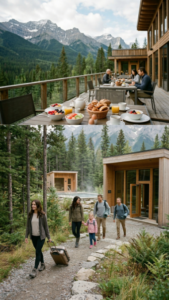
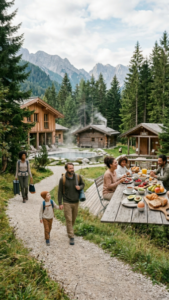
As travelers seek sleep, nature, spas, saunas, better food and emotional recovery, the wellness trip is becoming more flexible, social and family-friendly.
NEW YORK — The old image of wellness travel was often severe: silent mornings, strict schedules, calorie-controlled menus, phone-free rules and a sense that vacation had been replaced by self-improvement homework. The new version looks softer, looser and more personal.
A traveler may book a quiet solo weekend to sleep for nine hours and walk in the woods. A couple may choose a hotel because it has a sauna, a cold plunge and good food, not because it promises transformation. A family may combine a beach holiday with yoga, children’s activities, spa treatments and early nights. Friends may travel for hot springs, hiking, sound baths, thermal circuits or a digital break that still allows dinner, laughter and a glass of wine.
This is wellness travel without the scolding tone.
The shift reflects a broader change in how people think about health after years of pandemic disruption, remote work, political stress, climate anxiety and constant digital noise. Many travelers no longer want a trip that demands discipline from sunrise to sunset. They want a trip that helps them feel restored without making pleasure feel irresponsible.
Condé Nast Traveler described the 2026 mood as “wellness your way,” a phrase that captures the movement away from one-size-fits-all retreats. The idea is not that structured retreats are disappearing. Luxury clinics, longevity programs, fasting centers and medical-wellness resorts remain part of the market. But they now sit beside a wider menu of gentler options: social saunas, sleep-focused hotels, nature immersion, family retreats, solo reset trips and vacations where wellness is woven into the day rather than imposed on it.
The business case is strong. The Global Wellness Institute says the wellness economy reached $6.8 trillion in 2024 and is projected to approach $9.8 trillion by 2029. Its research also shows wellness tourism has grown faster than overall tourism for more than a decade, with travelers who seek wellness experiences often spending more per trip than average tourists.
Hotels and destinations have noticed. Wellness is no longer confined to a basement spa or a page at the back of a brochure. It now shapes room design, lighting, menus, programming, outdoor space, sleep amenities and even the rhythm of the itinerary. Resorts advertise circadian lighting, pillow menus, recovery lounges, meditation decks, magnesium pools, infrared saunas, breathwork classes and guided hikes. Urban hotels promote better beds, quieter rooms, in-room stretching videos and healthier late-night dining.
Yet the most important change may be psychological. The wellness traveler is no longer always trying to become a different person. Often, the goal is simply to return home less depleted.
Sleep has become one of the clearest examples. For years, travel marketing celebrated doing more: more sightseeing, more restaurants, more nightlife, more check-ins, more photographs. Sleep tourism reverses that logic. A successful trip may be one where a guest misses nothing because rest itself is the point. Hotels are investing in soundproofing, blackout curtains, cooling mattresses, sleep consultations and schedules that do not punish guests for slowing down.
Nature is another anchor of the trend. Forest walks, desert retreats, mountain cabins, coastal paths and hot springs offer something that many people lack in daily life: open space, quiet and a body-based sense of time. National Geographic has pointed to 2026 interest in more elemental travel, including cold-water plunges, geothermal bathing and outdoor endurance experiences. These trips appeal because they feel physical without always feeling performative. A traveler does not need to master a wellness philosophy to understand the relief of warm water, clean air and a long walk.
Sauna culture has also moved from niche ritual to social activity. Communal saunas and thermal bathing spaces allow travelers to recover together rather than retreat into private isolation. In some destinations, the sauna is becoming a social room, a cultural experience and a wellness practice at once. That matters in an age when loneliness has become a public concern. Wellness travel is not only about escaping people; increasingly, it is about finding healthier ways to be with them.
Family wellness may be the most revealing sign of mainstream adoption. A retreat that once targeted a solo traveler seeking discipline now may offer programming for parents, children and grandparents. The promise is practical: adults can recover without leaving family life behind, and children can experience travel as something more than screens, queues and overstimulation. A family wellness trip might include beach time, nature play, cooking classes, gentle movement, earlier dinners and spa access for adults. It is not always quiet, but it may still be restorative.
Solo travel remains central, especially for people who see time alone as a form of repair. The solo wellness traveler may not be looking for isolation in the old retreat sense. Many want privacy with optional connection: a group hike, a shared sauna, a communal table, then a room where no one needs anything from them. For women in particular, solo wellness travel is often linked to safety, autonomy and the rare freedom to organize a day around one’s own body and mood.
Food is changing too. Wellness menus are less likely to be purely restrictive and more likely to emphasize freshness, local ingredients, gut health, protein, plant-forward cooking and pleasure. The green juice and the dessert can coexist. This is a quiet but important correction. For many travelers, food is one of the deepest pleasures of travel. A wellness trip that treats eating as punishment misunderstands why people leave home in the first place.
The risk, as always, is overmarketing. Wellness has become a powerful commercial label, and not every hotel that uses it offers meaningful restoration. A standard massage, a smoothie and a yoga mat do not automatically make a trip wellness travel. Nor does a menu of expensive treatments guarantee health benefits. Some programs borrow the language of science without providing evidence. Others turn recovery into another luxury status symbol, available mainly to those who can afford long stays and premium services.
That is why travelers are becoming more discerning. The best wellness trips are not necessarily the most expensive or medically elaborate. They are the ones that match a traveler’s actual need. Someone who is burned out may need sleep and silence, not a boot camp. A parent may need child care and an hour in the sauna, not a strict detox. A remote worker may need sunlight, movement and reliable boundaries around email. A grieving traveler may need nature and privacy more than a treatment menu.
The most credible travel companies are responding by offering choice rather than commandments. They allow guests to build a trip around rest, movement, social connection, spa care, culture, food or family time. They recognize that wellness can mean waking early for a hike or sleeping late without guilt. It can mean abstaining from alcohol or ordering champagne after a massage. It can mean going alone or bringing three generations.
This flexibility may explain why wellness travel is becoming less intimidating. It no longer belongs only to the hyper-disciplined, the wealthy biohacker or the retreat veteran. It is entering ordinary vacation planning. A traveler choosing between two hotels may pick the one with better sleep reviews, easier access to nature, healthier breakfast or a real sauna. A family planning spring break may look for a resort that leaves everyone calmer rather than more exhausted.
The future of wellness travel will likely be defined by this balance: evidence without rigidity, comfort without emptiness, pleasure without excess and rest without shame. The strongest version of the trend does not ask travelers to optimize every hour. It gives them permission to recover in a way that fits their life.
In that sense, “wellness your way” is more than a marketing phrase. It is a correction to a culture that has often treated health as another performance. The new wellness trip does not need to prove that the traveler has changed forever. It only needs to make the return feel a little lighter.