
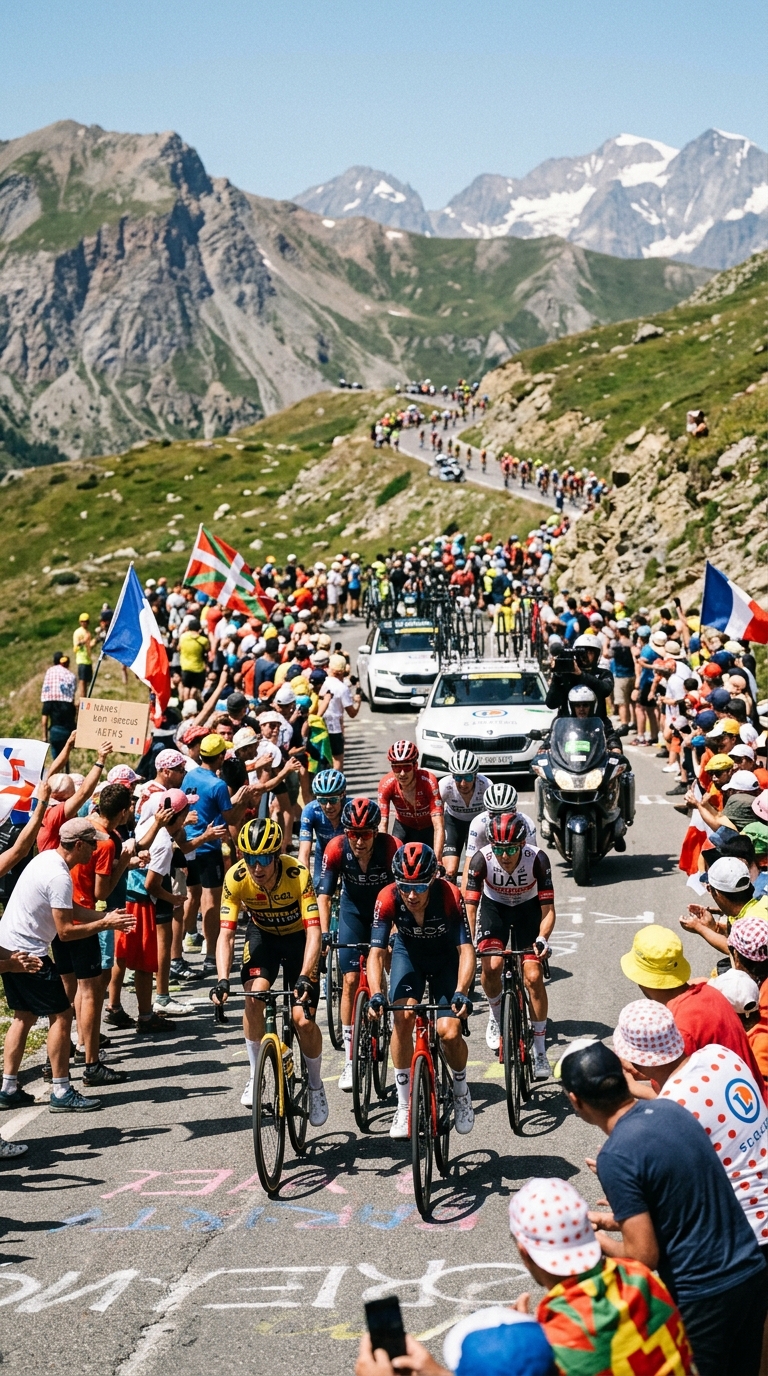
With multiple mountain stages and two finishes on Alpe d’Huez, the race is designed to reward endurance, courage and tactical patience.
The Tour de France has always been a race of geography as much as cycling. Its route determines the story before the riders even clip into their pedals.
The 2026 edition offers a course built for drama in the mountains. The official route includes 21 stages, with flat days, hilly terrain, time trials and a heavy mountain program that runs through some of cycling’s most punishing landscapes.
For general classification contenders, the route demands complete skill. A rider must survive crosswinds and positioning battles on flatter stages, limit losses in time trials, recover through rest days and still have the legs to attack or defend in the Alps.
The double arrival at Alpe d’Huez is the symbolic center of the race. Few climbs in cycling carry the same emotional weight. Its hairpins are part of Tour mythology, a place where champions are celebrated and weaknesses are exposed.
Modern cycling has become more aggressive, with attacks launched earlier and teams less willing to wait for predictable final climbs. The 2026 route may encourage that style. With summit finishes and repeated mountain tests, riders who hesitate may find themselves running out of road.
The Tour is also a logistical machine. Towns, police, broadcasters, sponsors and fans move through France and beyond in a traveling festival that is both sporting event and cultural ritual. The route matters to local economies as much as to teams.
For sprinters, opportunities remain, but they will have to suffer for them. For climbers, the race offers possibility. For fans, it promises the central tension that keeps the Tour alive: no rider can win in one day, but any contender can lose everything in one bad hour.
The yellow jersey is never awarded only to the strongest cyclist. It is awarded to the rider who best survives the route.
“””
