
From singers and dancers to magicians and comedians, international talent competitions have turned ordinary people into prime-time stories and made local dreams part of a global entertainment language.
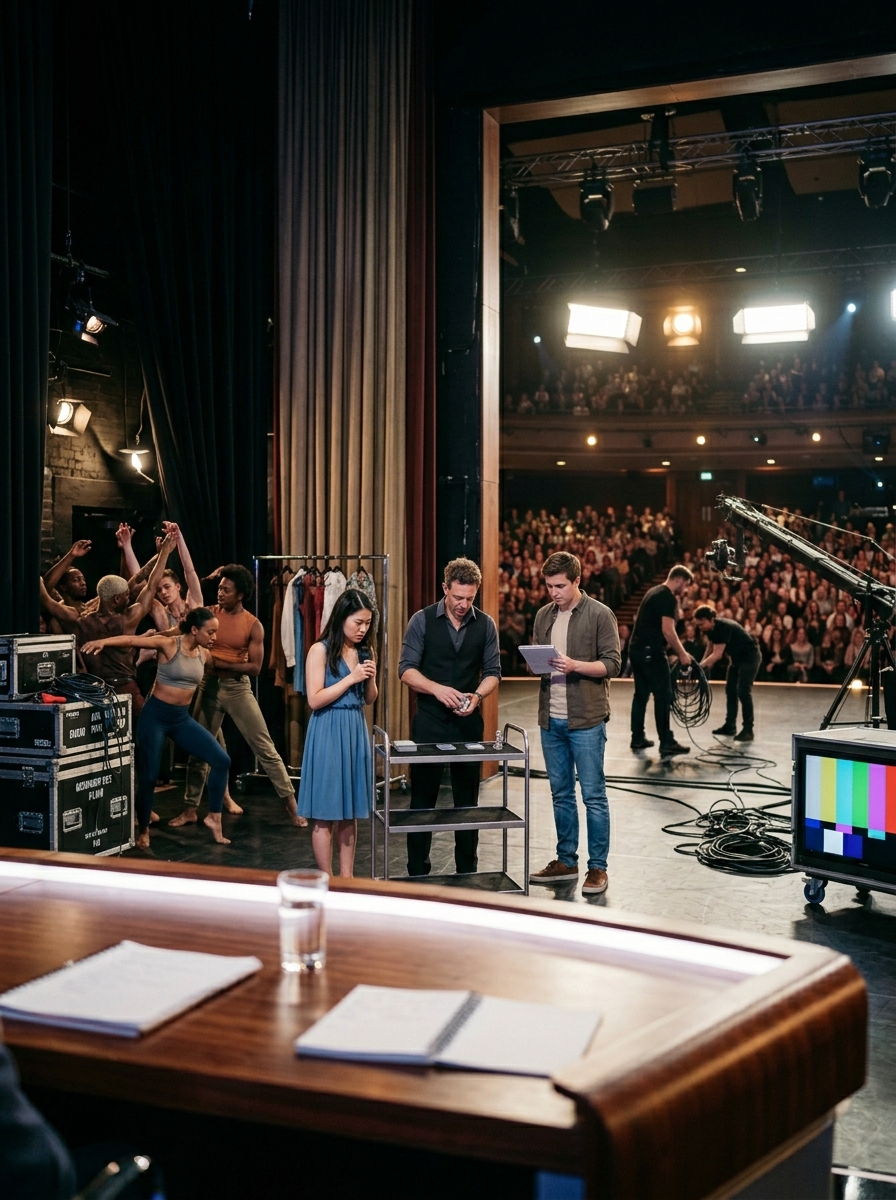
In almost every television market, the scene is familiar. A nervous contestant walks onto a bright stage. Judges lean forward. Families wait in the wings. The audience grows quiet. Then comes a song, a dance routine, a magic trick, a stand-up set or an act too unusual to classify. Within minutes, a stranger can become a national talking point and, in the age of social media, a global name.
Talent-search programs have become one of the most durable forms of modern entertainment because they combine competition, biography, surprise and public judgment. They are less dependent on a single language than scripted drama, easier to localize than many game shows, and powerful enough to create emotional moments that travel across borders. A singer’s high note, a child dancer’s precision, a magician’s impossible reveal or a comedian’s timing can be understood by viewers far from the country where the program was filmed.
The most famous global formats have different identities, but they share the same basic promise: hidden talent may be anywhere. “Idol” and “American Idol” built their appeal around the search for a recording star. “The Voice” changed the early part of the singing competition by asking coaches to listen before seeing the contestant. “The X Factor” broadened the pop-star formula with groups, categories and sharper drama. “Got Talent” opened the stage to almost anyone: singers, dancers, acrobats, ventriloquists, magicians, comedians, stunt performers, choirs and novelty acts. Dance-focused shows such as “So You Think You Can Dance” and “World of Dance” treated choreography, athleticism and style as the main event rather than a supporting element. Comedy competitions, though often harder to export because humor is deeply cultural, have also found audiences by presenting stand-up as both personal confession and public test.
Singing competitions remain the most recognizable branch of the genre. Their appeal is direct. Viewers understand the difference between a weak audition and a strong vocal performance almost instantly, even if they cannot explain technique. Songs also carry memory. A contestant who chooses a familiar ballad or pop anthem can borrow the emotional history of that song while adding a personal story. For producers, singing contests create an obvious pathway beyond television: streaming numbers, concert tours, recording contracts and fan communities.
“American Idol” became a landmark because it made the audition, the judging panel and the public vote central to the drama. The show was not only about who could sing. It was about who could survive criticism, improve week after week and persuade viewers to invest emotionally. Its success helped define the modern televised talent arc: discovery, rejection, transformation, fandom and final victory. Many later programs used the same emotional structure, even when they changed the rules.
“The Voice” succeeded by offering a different moral frame. Its blind auditions suggested fairness: talent first, image second. The rotating chair became one of the most effective visual devices in reality television. A single button press could turn a private performance into public validation. The coaches’ competition for contestants also shifted attention from humiliation to mentorship. That made the format attractive in many markets where viewers wanted drama, but not cruelty.
Variety formats such as “Got Talent” have perhaps the widest global reach because they do not depend on one artistic category. A singer can compete against a magician, a dance crew, a danger act or a comedian. That unpredictability is the point. Viewers do not know whether the next act will be moving, funny, strange or disastrous. The format revives an older vaudeville tradition for the digital era: a national stage where almost any performance skill can be tested in front of millions.
Magic acts have benefited strongly from these programs. Television gives magicians scale, close-up reaction shots and replay value. A successful illusion on a talent show is not only judged by whether the trick works, but by whether it creates disbelief in the room. Magicians also bring a different kind of suspense from singers. The audience waits not for a note, but for a reveal. When the reveal lands, the clip can travel quickly online because it invites viewers to watch again and ask how it was done.
Dance competitions attract audiences through precision, energy and visual impact. They work especially well internationally because movement crosses language barriers. A hip-hop crew from one country, a ballroom pair from another or a contemporary soloist performing a story of loss can all communicate through rhythm and body language. Dance formats also reflect cultural exchange. Street dance, Latin styles, classical training, K-pop influence, African dance forms and theatrical choreography now appear on the same kinds of stages, turning local movement traditions into global content.
Comedy is more complicated. A joke that succeeds in one language may fail in another, and social rules about satire, politics, family or identity differ widely. Yet comedy competitions remain compelling because stand-up is one of the most exposed forms of performance. A singer can rely partly on melody and production; a dancer can rely on music and movement. A comedian stands almost alone with timing, confidence and audience trust. When a comic wins over a cold room, viewers can feel the risk.
The emotional core of talent shows is not only performance. It is biography. Producers spend time showing contestants at home, at work, with parents, children, teachers or colleagues. These stories can be inspirational, but they can also be controversial when they appear too polished or manipulative. Still, the narrative power is undeniable. A warehouse worker singing opera, a shy teenager leading a dance crew, a veteran magician returning after years of rejection or a comedian turning hardship into laughter gives the audience a reason to care before the act begins.
Judges are another essential ingredient. The best panels create tension without overwhelming the contestants. One judge may represent technical expertise, another commercial instinct, another warmth, another skepticism. Viewers learn the judges’ habits and anticipate their reactions. A harsh comment can anger fans, a standing ovation can validate a performance, and a surprise vote can change the season. The judge is not merely an evaluator; the judge is part of the show’s storytelling machinery.
Public voting gives the audience a sense of ownership. Viewers are not just watching a competition; they are helping decide it. This is one reason talent shows produce intense fan behavior. Supporters do not simply admire contestants. They campaign for them, share clips, argue online and return each week to protect their favorite. That relationship can be especially powerful when a contestant represents a city, region, minority community or national identity.
Social media has transformed the genre. In earlier decades, a talent show performance lived mainly within a broadcast schedule. Now a two-minute audition can reach viewers who never watch the full episode. Viral clips have become a second stage, sometimes more important than the television stage itself. A contestant can lose a competition and still build a career if the performance travels widely online. For broadcasters, these clips extend the life of a program beyond prime time and attract younger audiences who may never sit through a full televised episode.
The format also works commercially because it is adaptable. A country can produce a local version with familiar judges, local humor, regional music and national voting habits while keeping the tested structure of the original. That balance between global format and local identity is central to the industry. The stage may look similar in London, Los Angeles, Manila, Mumbai, Seoul or Johannesburg, but the stories, songs, accents and ambitions feel local.
Critics argue that talent shows can create unrealistic dreams, overpackage emotion and turn rejection into entertainment. Those concerns are valid. Not every winner becomes a star, and not every viral contestant receives long-term support. The pressure on young performers can be intense, and the line between opportunity and exploitation must be watched carefully. The best programs are those that combine spectacle with duty of care, honest judging and responsible treatment of contestants after the cameras stop.
Yet the genre endures because it answers a universal desire: people want to see possibility made visible. Talent shows dramatize the belief that someone unknown can step forward and be recognized. They turn private practice into public judgment, and public judgment into shared emotion. At their best, they remind audiences that excellence may come from unexpected places.
Whether the act is a singer holding one impossible note, a dance crew moving like a single body, a magician bending the logic of the room or a comedian making strangers laugh together, the attraction is the same. The world watches because the stage is both ordinary and extraordinary. Anyone might walk onto it. Almost anything might happen. And for a few minutes, before the judges speak and the votes are counted, a performer has the attention of the world.”””
