
“””AFTER HER PARENTS DIED, A WOMAN WAS FORCED FROM HOME — UNTIL AN OLD BOX CHANGED EVERYTHING
In this fictional family drama, an inheritance dispute exposes betrayal, buried documents and a mother’s final effort to protect the daughter she feared would be left with nothing.
The house had always been described as the heart of the family. It was where birthdays were celebrated, where neighbors came for tea, where two children learned to walk beneath the same roof and where their parents believed they had built something that would outlast them. But after both parents died within the same year, the home became something else: a battlefield of memory, ownership and power.
For Anna, the younger daughter, grief had barely settled before her older brother, Marcus, began speaking in the language of control. He talked about “handling matters,” “protecting the estate” and “making practical decisions.” At first, Anna was too exhausted to challenge him. She assumed he meant to help. He was the eldest, the son their father had trusted with bank errands and household paperwork. In the days after the funeral, that authority seemed natural.
Then the locks were changed.
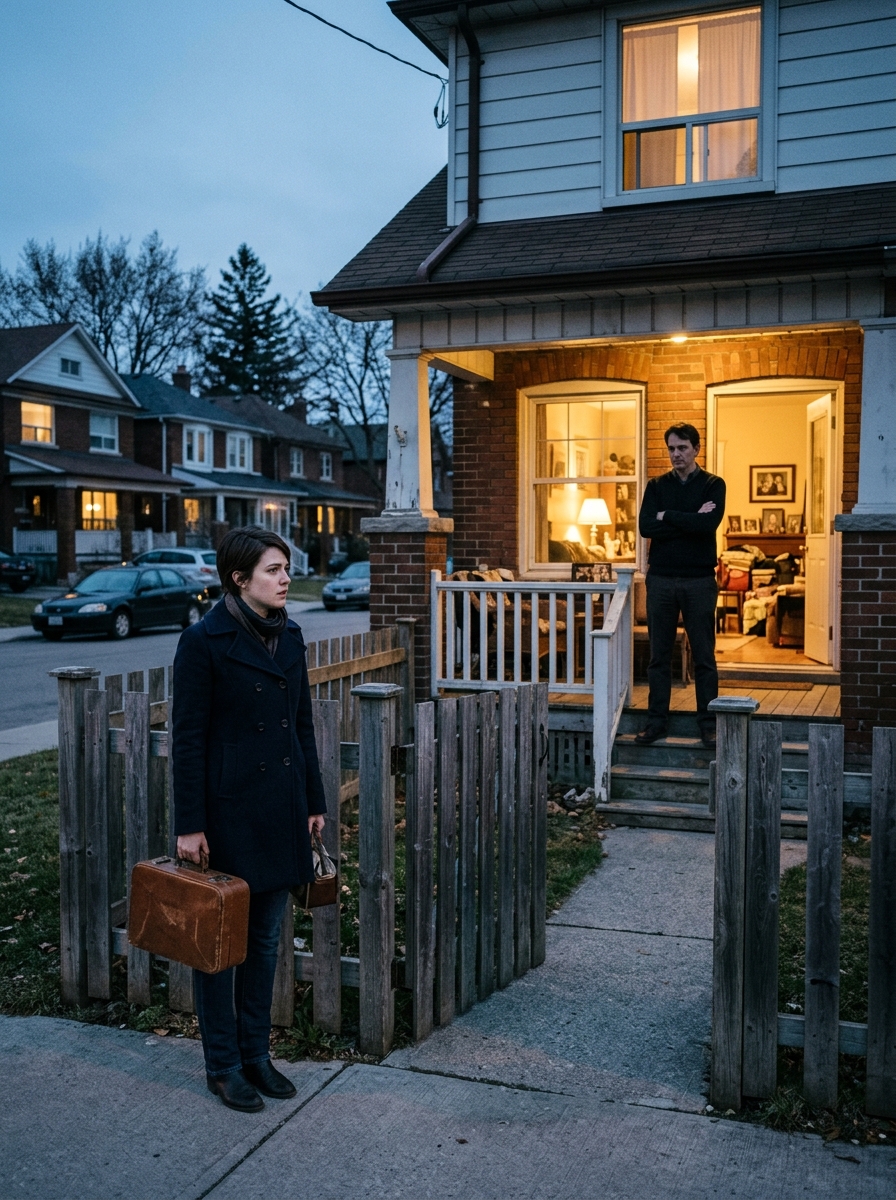
Anna returned from work one evening to find her key no longer fit the front door. A suitcase containing some of her clothes had been left near the gate. Marcus stood on the porch and told her the house legally belonged to him. He said their parents had made arrangements. He said she had already received enough over the years. He said it was time for her to stop depending on a home that was no longer hers.
The words were delivered without anger, which made them feel even colder. Anna asked to see documents. Marcus refused, saying the matter was settled. She asked to enter and collect personal belongings from her old room. He said he would send them later. Behind him, the curtains moved slightly. His wife was inside, watching but not speaking.
Anna spent that night at a friend’s apartment, still wearing the black dress she had used for mourning. She had lost her parents, then her home, and finally the belief that family would protect her when the world became cruel. In the weeks that followed, Marcus moved quickly. He transferred utilities, contacted relatives and presented himself as the responsible heir. To outsiders, it looked like organization. To Anna, it looked like erasure.
The family’s relatives were divided. Some advised Anna not to fight. They said inheritance disputes destroy families and that peace was worth more than property. Others quietly suspected Marcus had taken advantage of her. But suspicion was not proof. Without papers, without money for a long legal battle and without emotional strength, Anna had little more than the memory of her parents telling both children that the house was meant for them equally.
The old box appeared almost by accident.
Several weeks after being forced out, Anna received a call from a retired neighbor who had been close to her mother. The woman said Anna’s mother had left something in her care shortly before her final illness worsened. It was a small wooden box, scratched at the corners and tied with a faded ribbon. The neighbor said she had been instructed to give it only to Anna, and only if there was trouble after the parents were gone.
Inside were photographs, letters, a bank receipt, copies of property records and a sealed envelope in her mother’s handwriting. At first, Anna could barely open it. The scent of old paper and lavender soap seemed to bring her mother back into the room. When she finally unfolded the letter, the first line stopped her cold.
“If your brother has told you the house is his alone, do not believe him.”
The letter explained what Anna’s mother had apparently feared but never fully said aloud. According to the documents in the box, the parents had signed a later agreement dividing the house and savings between both children. More importantly, there were copies of messages suggesting Marcus had pressured their father, during illness, to sign an earlier transfer that favored him. The mother’s letter stated that she had discovered the change, confronted her husband and insisted on correcting it.
The box contained a copy of the corrected will, notarized and witnessed. It also included the name of the lawyer who had prepared it.
For Anna, the discovery did not bring immediate victory. It brought a new kind of pain. Her mother had known there might be a betrayal. She had prepared for it quietly, perhaps to avoid conflict while both parents were still alive. Every paper in the box felt like protection, but also like evidence that the family had been breaking long before the funeral.
Anna contacted the lawyer named in the documents. He confirmed that her parents had revised their estate plan and that Anna was entitled to a share. He also said the existence of the box was important because it contained copies that could help challenge Marcus’s claims. The legal process would not be simple, but it would no longer be one sibling’s word against another’s.
When Marcus learned that Anna had found the documents, his confidence shifted. He first dismissed the papers as old drafts. Then he accused Anna of being manipulated by outsiders. Later, he argued that their parents had wanted him to manage the property because he had “done more” for the family. But the documents told a more precise story. They suggested that management was not ownership, and that grief had been used as an opportunity.
The confrontation that followed was less explosive than Anna had imagined. There was no dramatic confession, no sudden apology, no embrace between siblings. Instead, there were lawyers, phone calls, signatures, delays and the slow exposure of facts. Relatives who had urged silence began asking questions. Those who had supported Marcus became more cautious. The image of the dutiful eldest son started to fracture.
At the center of the dispute was not only a house, but a question familiar in many families: who controls the story after parents are gone? The person with access to documents, keys and accounts can shape the first version of truth. That version may harden quickly if others are grieving, financially weak or afraid of conflict. Inheritance battles often become less about wealth than recognition. To be denied a share can feel like being denied one’s place in the family itself.
Anna’s old room remained locked for months. Marcus continued living in the house while the case moved forward. But the meaning of the home had changed. It was no longer simply the place from which she had been expelled. It was the place her mother had tried, in her final act of foresight, to keep from being stolen.
The sealed letter became Anna’s emotional anchor. Her mother had written that fairness mattered because love without fairness leaves wounds that last generations. She had asked Anna not to seek revenge, but not to surrender either. “Do not let anyone tell you that keeping peace means accepting injustice,” the letter said.
Those words reshaped Anna’s response. She stopped seeing herself as a helpless younger sister begging for kindness. She became a claimant with evidence, a daughter carrying out her parents’ documented wishes and a woman rebuilding her life from a position of truth.
The final resolution, in this fictional account, did not restore the family as it had been. Some damage could not be undone. Marcus eventually faced a legal settlement requiring him to recognize Anna’s share of the estate. The house was either to be sold and divided or refinanced so Anna could receive her portion. The decision ended the legal dispute, but not the emotional one.
Anna did not return to live in the house. Too much had happened at its gate. Instead, she used her share to rent a small apartment and later begin planning a business her mother had once encouraged. She kept the wooden box on a shelf near the window, not as a symbol of property, but as proof that silence is not always emptiness. Sometimes it is preparation.
The tragedy of the story lies in the brother’s betrayal, but its force comes from the mother’s foresight. She understood that documents can speak when the dead cannot. She understood that love must sometimes be protected by evidence. And she understood that a daughter pushed out of a home might one day need more than memories to prove she belonged.
In the end, the box did not give Anna back the family she had lost. It gave her something more practical and, in that moment, more powerful: the truth.”””
