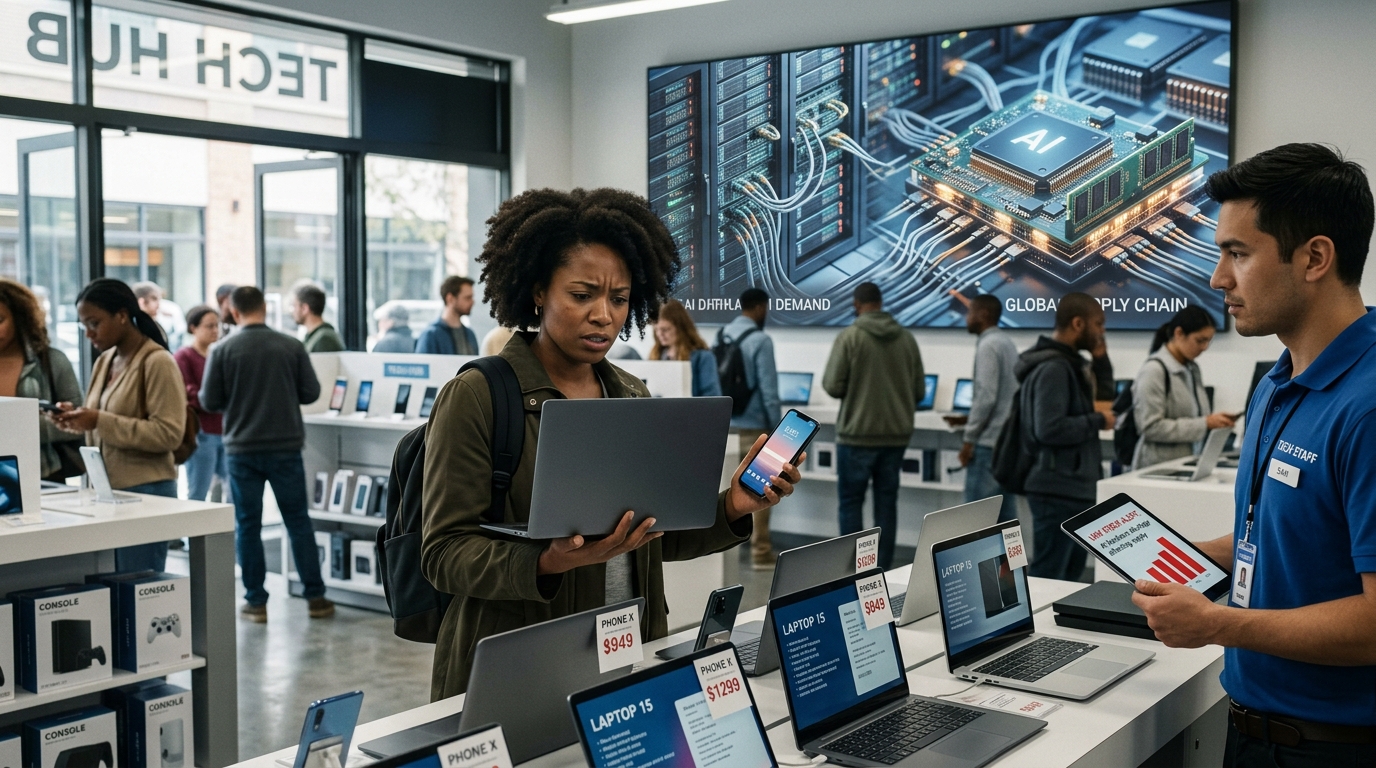
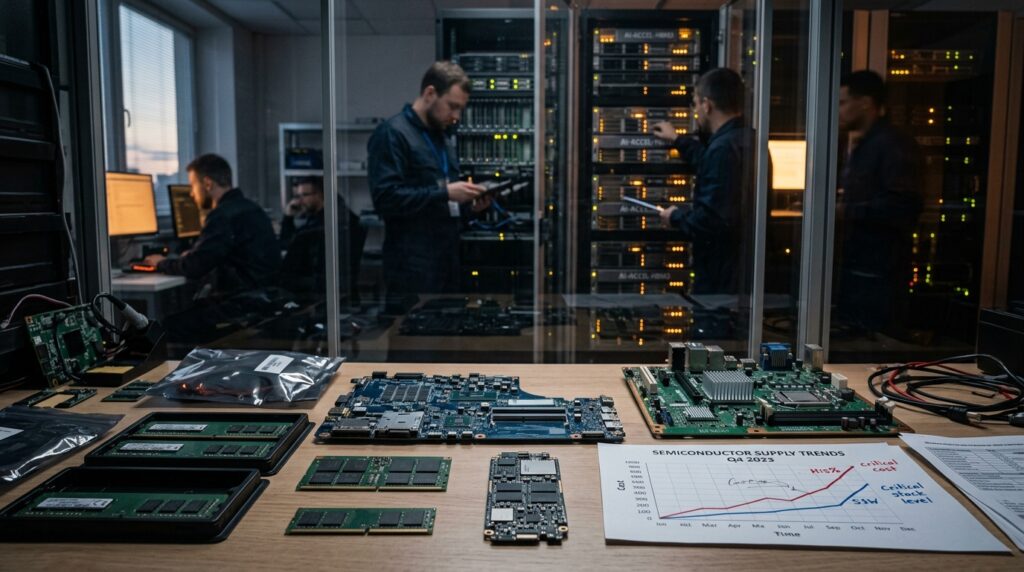
A surge in data center investment is absorbing memory chip capacity, leaving consumer electronics makers with higher costs and fewer affordable options.
The next price shock for consumer technology may not come from a new display, a faster processor or a more advanced camera. It may come from memory.
Across the global electronics supply chain, the explosive build-out of artificial intelligence infrastructure is tightening supplies of DRAM and NAND flash, the memory chips that allow computers, smartphones and game consoles to run applications and store data. The result is a cost squeeze that is already moving from semiconductor contracts into retail prices, threatening to make budget laptops, entry-level smartphones and gaming hardware more expensive through 2026.
The pressure is not a repeat of the pandemic-era chip shortage, when factory disruptions, shipping bottlenecks and sudden swings in consumer demand left carmakers and electronics brands short of parts. This time, the strain is being driven by a structural shift in where memory capacity is going. AI servers require enormous amounts of high-bandwidth and high-capacity memory. As cloud companies, chipmakers and data center operators race to build systems for AI training and inference, memory producers have strong incentives to prioritize the most profitable enterprise products over lower-margin parts used in mass-market devices.
That shift has changed the economics of ordinary gadgets. Memory once functioned as one of the components that tended to become cheaper over time, helping manufacturers add more RAM and storage to mainstream products without sharply raising prices. Now, analysts say the opposite is happening. DRAM and NAND prices have risen sharply, supply allocations are tightening, and device makers are being forced to choose between raising prices, cutting specifications, delaying models or dropping low-end configurations entirely.
The impact is likely to be felt first at the cheapest end of the market. A premium smartphone or high-end laptop can sometimes absorb a higher component bill because its retail price and profit margin are larger. A budget phone or entry-level notebook has far less room. When memory represents a meaningful share of the bill of materials, even a modest increase can turn a profitable product into a loss-making one. That is why industry warnings have focused not only on higher prices but also on the potential disappearance of some low-cost models.
IDC has warned that the global memory shortage could persist well into 2027, with AI infrastructure demand outstripping supply and pushing manufacturers to reallocate capacity toward high-bandwidth memory and high-capacity DDR5 used in data centers. The research firm said the effect could be especially severe for midrange Android phones and PCs, where memory costs can account for a large portion of total hardware expense.
TrendForce has also raised its price forecasts sharply. Its latest memory market survey said persistent demand from AI and data centers has worsened the global supply-demand imbalance, giving suppliers more pricing power. The firm projected conventional DRAM contract prices to rise 90% to 95% quarter over quarter in the first quarter of 2026, while NAND flash contract prices were expected to rise 55% to 60%. PC DRAM prices, it said, were set for an increase of more than 100% in the same quarter.
For consumers, those figures will not appear as a simple line item labeled “RAM shortage” at checkout. The effect will be more subtle. A laptop that previously started with 16GB of memory may ship with fewer affordable configurations. A phone maker may keep the same price but reduce storage options, slow RAM upgrades or delay discounts. A console maker may raise the price of existing hardware rather than wait for a new generation. Retailers may have fewer promotions because replacement inventory costs more.
Some of this is already visible. Technology companies have begun raising prices or reducing lower-end options in selected markets, while analysts say more increases are likely as earlier stockpiles are depleted. The Guardian reported that several major laptop and phone manufacturers have increased prices or pulled cheaper models, and that affordable devices under key budget thresholds could become harder to find. The outlet also cited analysts warning that sub-$500 entry-level PCs may become commercially unviable by 2028 if memory costs remain elevated.
The gaming industry is also exposed. Modern consoles depend on large pools of high-speed memory, and the same cost pressures affect graphics cards used in gaming PCs. AMD, whose chips power major gaming hardware and PCs, has told investors that higher memory and component costs are expected to weigh on client and gaming demand in the second half of 2026. Its chief financial officer said gaming revenue could decline by more than 20% in the second half compared with the first half, citing higher component and memory costs as one factor.
The deeper problem is that AI demand does not merely compete for finished memory chips; it competes for manufacturing capacity. Semiconductor fabs are expensive, highly specialized facilities that cannot instantly shift output to meet every new demand spike. High-bandwidth memory, or HBM, is especially attractive to suppliers because it commands premium prices and is essential for AI accelerators. But producing more HBM can reduce the capacity available for conventional DRAM used in laptops, desktops, servers and consumer electronics.
S&P Global Market Intelligence described this as a squeeze on legacy DRAM supply, noting that the same production ecosystem supports both AI-linked high-bandwidth memory and standard DRAM. As capacity tilts toward HBM, traditional DRAM prices rise. The incentives are clear: memory makers can earn higher margins selling advanced parts into AI systems than selling commodity chips into low-cost consumer devices.
The three dominant memory producers — Samsung Electronics, SK Hynix and Micron Technology — are investing in additional capacity, but new fabs and expanded lines take time. Even when companies announce new production, the relief may not arrive for years. That lag leaves consumer electronics makers trying to manage the near-term shock through purchasing contracts, stockpiling, redesigns and pricing changes.
Larger companies may be better positioned. Apple, Samsung and other global brands often negotiate long-term supply agreements and can use scale to secure priority access. Smaller manufacturers, especially those dependent on thin-margin Android phones or budget PCs, may face harsher choices. They can pass costs to consumers and risk lower demand, hold prices and accept reduced margins, or cut specifications in ways that may make their products less competitive.
The implications extend beyond individual product categories. If memory costs remain high, the pace of affordable computing could slow. For years, cheaper RAM and storage helped bring better devices to students, small businesses and consumers in emerging markets. A reversal would widen the gap between premium users who can pay for top-tier hardware and budget buyers who depend on low-cost models.
There are also consequences for repair and resale markets. If new devices become more expensive, consumers may keep existing laptops and phones longer. Refurbished devices could become more attractive, but their prices may also rise as demand increases. Businesses may delay refresh cycles, while schools and public institutions could face higher procurement costs just as digital services become more central to education and administration.
The shortage is unlikely to affect all products equally. Premium smartphones may keep their headline features because flagship buyers are less price-sensitive. Gaming consoles may face selective increases depending on regional pricing and inventory. Low-end Chromebooks, inexpensive Windows laptops and entry-level Android phones are more vulnerable because they compete heavily on price and have less flexibility to absorb component inflation.
There is still uncertainty. Memory markets are cyclical, and a slowdown in AI infrastructure spending could ease pressure. A wave of new capacity could eventually rebalance supply. Consumer demand could weaken enough to force manufacturers and retailers to discount products despite higher costs. But for now, the direction is clear: AI has become a powerful new claimant on the global memory supply chain, and ordinary buyers are beginning to pay for it.
For years, the technology industry promised that better hardware would become cheaper and more widely available. The memory crunch is testing that assumption. The AI boom may accelerate software and cloud computing, but it is also making the physical building blocks of everyday devices more expensive.
The result could be a new era in consumer electronics: fewer bargain laptops, fewer aggressively priced phones and game consoles that stay costly for longer. The chips inside AI data centers may be invisible to most consumers, but their pull on global memory supply is now showing up in the devices people carry, work on and play every day.”””