“””
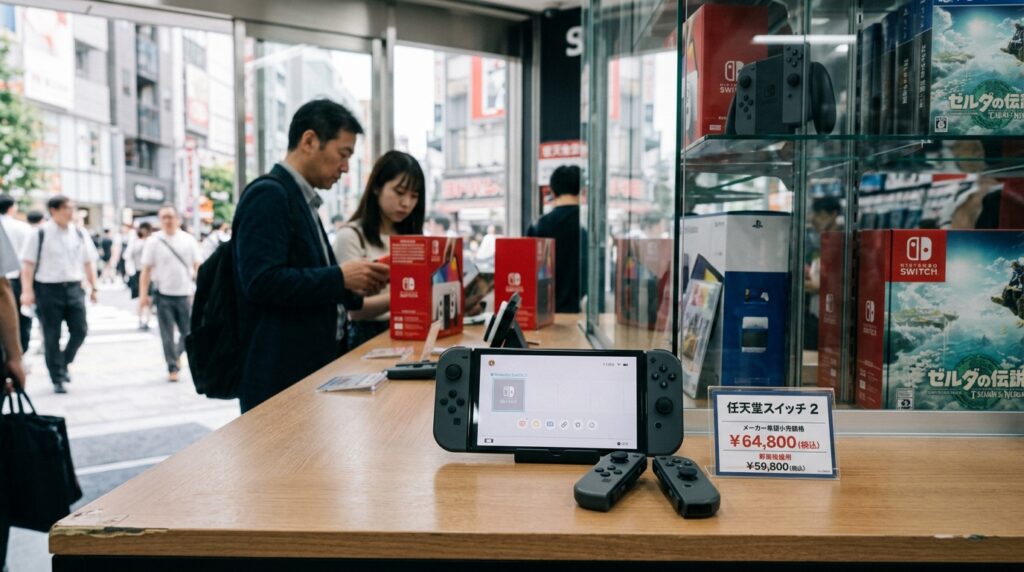
The Kyoto-based gaming company will lift prices in Japan this month and in the United States, Canada and Europe in September, testing consumer demand for one of the industry’s most important consoles.
Nintendo is raising the price of its Switch 2 console across several major markets, a rare mid-cycle increase that reflects the growing pressure on video game hardware makers from component costs, currency shifts and a tougher global trading environment.
The company said the price of the Nintendo Switch 2 Japanese-Language System in Japan will rise to 59,980 yen from 49,980 yen, effective May 25, 2026. In the United States, the console’s suggested retail price will increase to $499.99 from $449.99 beginning September 1. Canada will see the price rise to 679.99 Canadian dollars from 629.99 Canadian dollars, while the European price on My Nintendo Store will increase to 499.99 euros from 469.99 euros on the same date.
The announcement marks one of Nintendo’s clearest acknowledgments yet that the economics of selling dedicated gaming hardware have changed. For years, console makers have relied on scale, software revenue and long hardware cycles to keep prices steady or reduce them over time. Nintendo’s latest move reverses that pattern, placing the Switch 2 in a higher price bracket less than two years after its launch and putting fresh pressure on families, casual players and late adopters.
Nintendo cited “changes in market conditions” and said the impact of those changes is expected to extend over the medium to long term. The company did not give a detailed breakdown in its price announcement, but the decision comes as the wider technology sector faces elevated costs for memory, storage and other components, partly driven by competition for supply from artificial intelligence infrastructure. Tariffs and currency volatility have also complicated planning for Japanese exporters selling into North America and Europe.
The increase in Japan is broader than the international adjustment. Nintendo will also raise domestic prices for the original Switch family, including the OLED model, the standard Switch and the Switch Lite. The OLED model will rise to 47,980 yen from 37,980 yen, the standard Switch to 43,980 yen from 32,978 yen, and the Switch Lite to 29,980 yen from 21,978 yen. The company said the multi-language Switch 2 sold through My Nintendo Store in Japan will not change in price.
Nintendo Switch Online subscriptions will also become more expensive in Japan from July 1. The individual 12-month plan will rise to 3,000 yen from 2,400 yen, while the 12-month family plan will increase to 5,800 yen from 4,500 yen. The Expansion Pack tier will also rise. Nintendo said the service is offered globally and that pricing is being adjusted to better align fees across regions. Similar service price revisions are planned for South Korea.
In the United States, Nintendo of America said the price of the original Switch system is not changing for now. That distinction matters: the company appears to be protecting the entry-level path into its older platform in the U.S. while moving the newer Switch 2 into a more premium position. Pricing for Latin America will be announced later, Nintendo said.
The Switch 2 remains central to Nintendo’s business after a strong first year. The company reported that the new console sold 19.86 million units in the fiscal year ended March 2026, outpacing the original Switch’s first full fiscal-year performance. Software sales tied to the new platform have also given Nintendo a fresh earnings engine after years of relying on the extraordinary longevity of the original Switch.
But the company is also warning investors not to expect the same pace to continue. Nintendo forecast Switch 2 hardware sales of 16.5 million units in the fiscal year through March 2027, a decline from the launch-heavy first year. That is not unusual in the console business, where early demand is often concentrated among enthusiasts and loyal customers. Still, a higher price could make the second-year challenge more difficult, especially in markets where household budgets are under pressure.
The price increase comes at a delicate moment for the games industry. Hardware makers are trying to preserve margins while maintaining large player bases for software, online services and digital storefronts. Raising the price of a console can protect profitability, but it can also slow adoption and create openings for competitors, older hardware or PC and mobile gaming alternatives.
Nintendo’s advantage is that it competes differently from Sony and Microsoft. The Switch line is built around exclusive software, hybrid play and family-friendly franchises rather than raw processing power. Games such as Mario Kart, Super Mario, The Legend of Zelda, Animal Crossing and Pokémon have historically given Nintendo unusual pricing power. Many customers buy Nintendo hardware specifically to access those games, making the console less directly comparable with a PlayStation, Xbox or gaming PC.
Even so, the new prices create a tougher value equation. In the United States, a $499.99 Switch 2 sits closer to traditional home consoles than the original Switch ever did. In Europe, the 499.99 euro price may feel especially steep for buyers who already face higher living costs and tax-inclusive retail pricing. In Japan, the 10,000-yen increase for the domestic-language Switch 2 is substantial, particularly because Nintendo has long treated its home market as a core base for hardware adoption.
The company apologized for the inconvenience to customers and stakeholders, language that suggests it understands the reputational risk. Nintendo has cultivated an image of accessibility and broad appeal, and sudden price increases can be jarring for a brand associated with family entertainment. The timing also gives consumers in the United States, Canada and Europe several months to buy the console before the September increase, potentially pulling demand forward into the summer.
Retailers may see a short-term sales lift as customers move to purchase before the deadline. But that effect can be followed by a softer period after the higher price takes effect. Nintendo will need a strong software calendar to keep momentum intact. The company has said it will continue supporting Switch 2 with first-party titles and games from outside publishers, a critical factor because software often drives hardware purchases more effectively than hardware specifications.
The broader context is that console pricing has become less predictable. For much of gaming history, hardware launched at a set price and became cheaper as manufacturing improved. In recent years, however, the industry has seen prices hold steady longer or rise in response to inflation, supply disruptions and foreign exchange movements. Sony and Microsoft have both adjusted console or accessory pricing in various markets, signaling that Nintendo is not alone in facing pressure.
What makes Nintendo’s decision especially important is the scale of the Switch platform. The original Switch became one of the most successful consoles ever, not by chasing high-end graphics but by expanding where and how people play. The Switch 2 is meant to extend that formula while giving developers more modern hardware. If the price rises too far, Nintendo risks narrowing the audience that made the platform so powerful.
For investors, the increase may be read as a defensive move to protect earnings as costs rise and second-year hardware sales normalize. For consumers, it is a clear message that the cheapest window to buy a Switch 2 in several markets is closing. For the industry, it is another sign that the economics of console gaming are being reshaped by forces well beyond game design: global supply chains, component demand, trade policy and exchange rates.
Nintendo has often succeeded by resisting the assumptions of the wider technology market. This time, however, it is being forced to respond to the same cost pressures affecting much of the hardware business. The company still has powerful franchises, a distinctive console and a large audience. The question is whether those strengths will be enough to carry the Switch 2 into its next phase at a higher price.
“””