
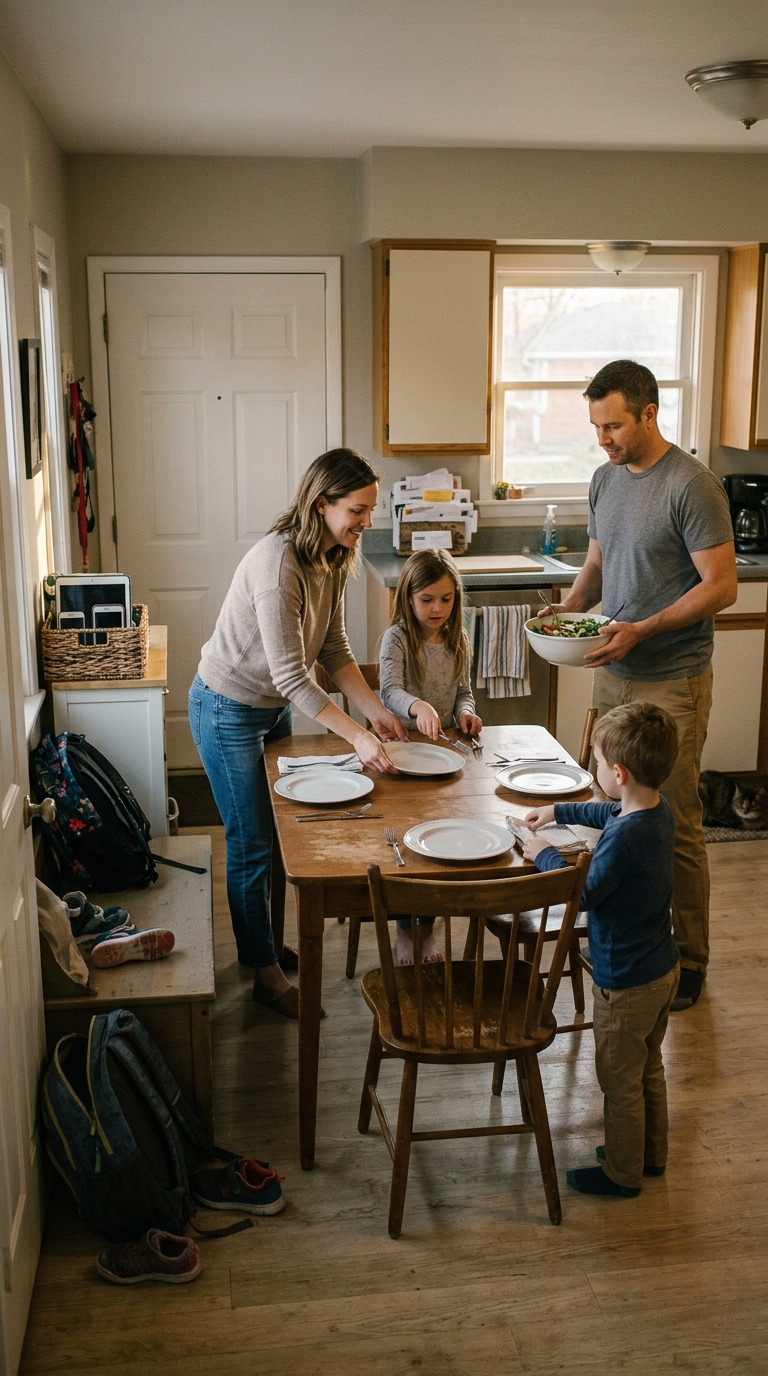
In households stretched by work, screens and rising costs, ordinary rituals are being rediscovered as anchors of stability.
Family life has always required coordination, but the modern household often feels like a constant negotiation with time. Work messages arrive during dinner. Children’s activities fill weekends. Older relatives need care. Meals are rushed. Sleep is delayed. In response, many families are returning to a simple but powerful tool: routine.
Routines do not sound fashionable. They lack the glamour of travel, technology or wellness products. Yet they shape daily health more deeply than many lifestyle trends. Regular sleep, shared meals, movement, chores and screen boundaries can create predictability in homes that otherwise feel overwhelmed.
The Centers for Disease Control and Prevention identifies sleep as important to health, while the World Health Organization emphasizes healthy diets and physical activity as foundations of well-being. Families translate those broad recommendations into ordinary decisions: when dinner happens, where phones go at night, whether children walk to school, who cooks and when the household slows down.
The value of routine is partly emotional. Children often feel safer when they know what comes next. Adults also benefit from reduced decision fatigue. A set bedtime, a Sunday meal plan or a weekly cleaning rhythm can remove dozens of small negotiations.
But routines are hard to protect. Many parents work irregular hours. Some hold multiple jobs. Housing may be crowded. Commuting can consume the evening. Families under financial stress may not have the luxury of calm schedules. Lifestyle advice that assumes stable work and abundant time misses the reality of many homes.
The strongest routines tend to be flexible rather than rigid. A family dinner may not happen every night, but one or two shared meals a week can still matter. A bedtime routine may be shorter during busy periods but still signal transition. The goal is not perfection. It is repetition enough to create trust.
Screens are one of the most common sources of conflict. Parents worry about children’s devices, children notice adults’ habits and everyone feels pulled by entertainment and messages. Some families create charging stations outside bedrooms, device-free meals or shared rules for weekend screen use. Rules work better when adults follow them too.
Food routines are changing as families balance health and cost. Batch cooking, simple breakfasts and planned leftovers help reduce stress. In many cultures, traditional meals already provide structure and identity. The challenge is preserving those rituals under modern time pressure.
Movement can also become a family routine. Walks after dinner, weekend park visits, cycling to school or dancing at home can make activity social rather than another task. Children who see adults move for enjoyment may learn that exercise is part of life, not punishment.
Chores are part of lifestyle too. When children help with age-appropriate tasks, they learn responsibility and belonging. When chores are shared fairly among adults, resentment may decline. Domestic labor is often invisible until it is uneven.
Routines also protect relationships. A weekly call to grandparents, a Saturday breakfast, bedtime reading or a monthly visit to relatives can maintain ties across distance and generations. In busy lives, connection often survives because it is scheduled.
There is a risk of idealizing family routine. Not all homes are safe, and not all families function well. Some people build chosen families through friends, neighbors or community groups. The principle remains the same: repeated care creates stability.
Employers and governments influence family routines more than they may acknowledge. Predictable schedules, paid leave, affordable child care, safe transport and reasonable work hours make healthy routines possible. Without structural support, families are asked to compensate privately for public failures.
The return to routine reflects fatigue with chaos. People are not seeking rigid domestic perfection. They are seeking anchors. In a world of constant alerts and economic uncertainty, knowing that dinner will be shared, lights will dim and someone will ask about the day can be profoundly stabilizing.
Lifestyle is often marketed as transformation. Family routine suggests another path: small repeated acts that make ordinary life more livable.
“””
