For Gen Z and Millennials, the return of live entertainment is not just a night out. It is a shared experience, a friendship ritual, a content engine and, increasingly, a reason to pay for streaming.
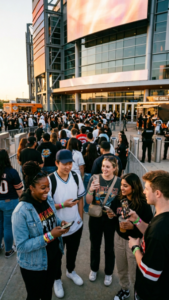
The crowd begins forming hours before the doors open. Outside stadiums, arenas, comedy clubs and festival gates, young fans arrive dressed for the camera as much as for the performance. They record the walk-in, the wristband, the first drink, the seat reveal, the opening chant, the punchline, the chorus and the final burst of confetti. For many of them, the event starts long before the headline act appears and continues well after the lights come up, replayed in group chats, TikTok edits, Instagram stories and streaming highlights.
Live entertainment, written off by some during the pandemic as a fragile business dependent on crowded rooms, has returned as one of the most dynamic forces in global media and culture. Concerts are filling stadiums, stand-up comedians are moving from clubs to arenas, sports rights are being treated as premium digital assets, and festivals are evolving into immersive social spaces. The strongest signal is coming from younger audiences, especially Gen Z and Millennials, who are treating live events as a rare form of entertainment that cannot be fully replicated on demand.
The revival is not simply nostalgia for the pre-pandemic night out. It reflects a shift in how audiences define value. In a media environment crowded with subscription apps, short videos, games and algorithmic feeds, live events offer scarcity. They happen once, in real time, with other people. That immediacy has become a selling point. The same generation often described as mobile-first and digital-native is showing a powerful appetite for experiences that are physical, communal and unpredictable.
The numbers support the shift. Live Nation, the world’s largest concert promoter, reported record fan attendance of 159 million across its promoted shows in 2025, up 5 percent from the previous year, with revenue rising 9 percent to $25.2 billion. PwC’s global entertainment and media outlook found that non-digital categories such as live music, events and cinema still accounted for 61 percent of consumer revenue in 2024, even as consumers spent more time online. The paradox is telling: audiences may discover culture on their phones, but they are still willing to spend heavily when culture becomes a place they can enter.
For young consumers, live events often serve three purposes at once. They are entertainment, social infrastructure and identity display. A concert is a chance to hear an artist, but it is also a reason to gather friends, plan outfits, travel, post, remember and signal belonging to a fan community. A comedy show is not just a performance; it can be a low-pressure social setting for friends or dates. A football match or basketball game is a contest, but also a collective ritual that allows fans to feel part of something bigger than the screen.
That is why the comeback has spread across categories. Music remains the most visible engine, driven by global tours and destination festivals. Sports remain the most reliable form of appointment viewing. Comedy has benefited from creators who build large followings online and then convert digital attention into ticket sales. Festivals have moved beyond lineups, offering food, fashion, wellness, brand activations, creator zones and highly designed environments built for both memory and media.
Social platforms have become the front door to these experiences. A European study by TicketSwap and Amsterdam Dance Event found that Gen Z discovers events mainly through social media, with Instagram leading and TikTok gaining ground. The same study found that many young buyers make attendance decisions with friends and that a significant share wait until friends confirm before purchasing. This is a crucial detail for promoters: the decision to attend is often collective, not individual. The event must feel socially worth it.
The phone is central to the modern live experience, but not always in the way critics assume. Young audiences are not merely distracted spectators filming instead of watching. For many, documenting is part of participation. A short clip from the front row, a reaction video after a winning goal, or a carousel of festival images helps extend the value of the ticket. The post becomes proof of presence, but also an invitation for others to join the next event. Live entertainment now travels through digital networks almost instantly, turning audiences into unpaid distributors of cultural momentum.
At the same time, the desire for authenticity is growing. Some artists and organizers have experimented with phone-free shows or limited-recording moments, betting that young audiences also want relief from constant performance. The tension is likely to define the next stage of live events: audiences want content, but they also want moments that feel real. The winners may be organizers who understand when to encourage sharing and when to protect immersion.
Sports show how the live-event boom is reshaping streaming. Deloitte’s 2025 Digital Media Trends survey found that 43 percent of Gen Z and Millennial respondents were willing to pay more for streaming video subscriptions that include access to live sports. A more recent Worldpanel by Numerator study of Australia’s streaming market found that sports and marquee live events drove about one-third of new subscriber sign-ups in the first quarter of 2026, with the shift most pronounced among Gen Z and Millennials. That finding points to a broader industry reality: the next phase of streaming growth may depend less on deep libraries and more on must-see moments.
For platforms, live programming solves a problem that bingeable libraries often cannot. A drama series can be watched later, shared by password or dropped after one month. A title fight, a final, a derby, a comedy special streamed live or a major concert creates urgency. It can attract new subscribers, reduce churn and generate conversation across social media. Streaming services that once competed mainly on scripted originals are now pursuing sports, wrestling, comedy, concerts and other live formats because they create appointment viewing in a fragmented market.
The strategy carries risks. Live rights are expensive, technical failures are public, and audiences are sensitive to rising subscription costs. Younger viewers may value live sports, but they are also comfortable with highlights, clips and second-screen commentary. A platform that buys live rights but offers a poor user experience may not keep subscribers for long. For Gen Z and Millennials, flexibility matters: they expect to watch on phones, tablets, laptops and televisions, sometimes while commuting, socializing or following parallel conversations online.
The live-events comeback is also changing cities. Major tours and festivals can boost hotels, restaurants, transport and local retail. Comedy nights and smaller cultural events help revive neighborhoods by giving people a reason to gather after work. Sports events remain anchors for civic identity and commercial activity. But growth brings pressure, including high ticket prices, resale concerns, crowd management, environmental impact and unequal access. The experience economy can create community, but it can also exclude those priced out of the room.
That challenge is especially important because the emotional appeal of live events is tied to togetherness. After years of remote work, digital entertainment and social fragmentation, younger audiences are using events as a form of reconnection. They are seeking what sociologists might call a third place, but with better lighting, louder sound and a shareable backdrop. The event is where online interests become offline friendships.
For artists, comedians, leagues and brands, the lesson is clear. A live event is no longer just a scheduled performance. It is a full ecosystem that begins with discovery, moves through group decision-making, peaks in the room and continues through digital afterlife. The audience is not only watching; it is producing, circulating and interpreting the experience in real time.
The comeback of live events does not mean digital entertainment is fading. It means the boundary between physical and digital culture has collapsed. Young audiences want both: the convenience of streaming and the electricity of being there. They want the clip and the chorus, the highlight and the handshake, the joke and the room erupting around it. In an age of endless content, the most valuable entertainment may be the kind that still requires people to show up.