The multiyear pact for up to 6 gigawatts of AMD GPUs could reshape Meta’s infrastructure strategy, challenge Nvidia’s dominance and give the Facebook parent a path to a major equity stake in AMD.
Meta Platforms has signed one of the most consequential artificial intelligence infrastructure agreements of the current technology cycle, committing to deploy up to 6 gigawatts of Advanced Micro Devices GPUs across its data centers in a multiyear partnership that could ultimately be worth more than $100 billion.
The agreement, announced by AMD and Meta on Feb. 24, marks a major win for AMD as it seeks to expand its role in the booming market for AI accelerators, the specialized chips used to train and run large artificial intelligence systems. It also gives Meta another major supplier as it races to build the computing backbone for AI products across Facebook, Instagram, WhatsApp, Threads and its broader family of services.
At the center of the deal is a customized AMD Instinct GPU based on the MI450 architecture, designed for Meta’s workloads and intended to support large-scale AI inference — the process by which AI models generate answers, recommendations, images, rankings or other outputs after they have been trained. AMD said shipments supporting the first gigawatt of deployment are expected to begin in the second half of 2026.
The deal also includes AMD’s 6th Gen EPYC CPUs, code-named “Venice,” ROCm software and the AMD Helios rack-scale architecture, a platform developed with Meta through the Open Compute Project. Meta will also be a lead customer for future AMD EPYC processors, including “Verano,” as the companies align hardware, software and systems roadmaps over multiple product generations.
For Meta, the agreement is both a supply deal and a strategic hedge. The company has been investing aggressively in AI infrastructure as Chief Executive Mark Zuckerberg pushes toward what he has described as “personal superintelligence,” a vision of AI assistants and services integrated across Meta’s consumer platforms, advertising systems, creator tools and emerging hardware devices.
Meta said the partnership forms part of a portfolio-based infrastructure strategy, combining chips from external suppliers with its own Meta Training and Inference Accelerator silicon program. That approach reflects a broader reality in the AI industry: the largest technology companies do not want to depend on a single supplier for the hardware that may determine the speed, cost and capability of their AI ambitions.
Nvidia remains the dominant force in AI accelerators, having built an early lead with its GPUs, networking systems and software ecosystem. But the scale of Meta’s AMD commitment shows that the market is no longer defined solely by access to Nvidia chips. For the largest AI buyers, the next phase is increasingly about diversification, power availability, custom system design and the economics of running AI models for billions of users.
The agreement also gives Meta a potential financial stake in AMD. AMD has issued Meta a performance-based warrant for up to 160 million shares of AMD common stock, structured to vest as shipment milestones are reached. The first tranche is tied to the initial 1-gigawatt deployment, with additional tranches vesting as Meta’s purchases scale toward 6 gigawatts. The exercise of the warrant is also linked to technical and commercial milestones and AMD share-price thresholds.
If fully exercised, the warrant could give Meta a stake of roughly 10% in AMD. That structure aligns the two companies in an unusually direct way: Meta benefits from securing chip supply and potential equity upside, while AMD gains a marquee customer whose volume could support its long-term AI revenue ambitions.
The financial size of the agreement has attracted attention because “gigawatt” has become a shorthand for the new scale of AI infrastructure. A 6-gigawatt deployment does not simply refer to a chip order; it points to vast data center capacity, power procurement, cooling systems, networking gear and long-term operational commitments. In the AI buildout, electricity and physical infrastructure are now as central as silicon.
The companies did not disclose a final dollar value in their official announcements, but the agreement has been reported as potentially exceeding $100 billion if fully deployed. That figure would place it among the largest known AI hardware commitments by a major technology company and underscore how capital-intensive the AI race has become.
The partnership comes as Meta continues to spend heavily on data centers and AI talent. The company has said it needs massive and scalable compute power to support growing AI workloads. Those workloads include recommendation engines, generative AI assistants, advertising tools, content creation features and future products that could rely on always-available AI inference.
Inference has become a crucial battleground. Training frontier models requires enormous bursts of compute, but inference can become even more demanding at scale because it happens continuously whenever users interact with AI systems. A company serving billions of people needs chips that are fast, power-efficient and economical enough to run AI features repeatedly across consumer and business products.
AMD’s opportunity lies in that shift. While Nvidia’s software and hardware stack remains deeply entrenched, large customers such as Meta have incentives to support credible alternatives. A viable second source can improve bargaining power, reduce supply-chain risk and allow data center operators to tailor hardware to specific workloads.
For AMD, the Meta agreement is a validation of its Instinct GPU roadmap and its broader platform strategy. The company is not merely selling chips; it is offering CPUs, GPUs, systems architecture and software that can be integrated into hyperscale data centers. That matters because the AI infrastructure market is moving from discrete chip purchases toward full-stack deployments.
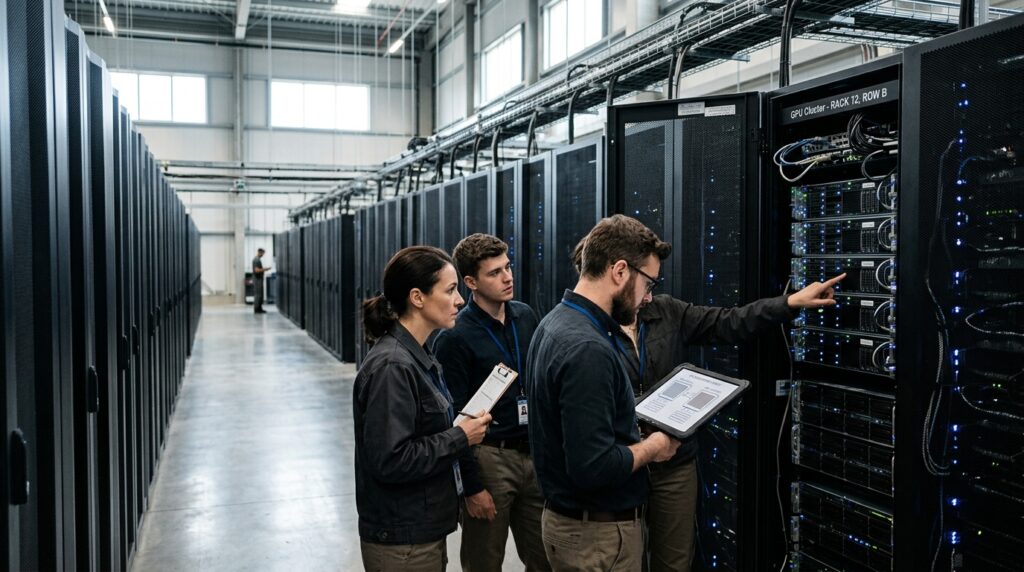
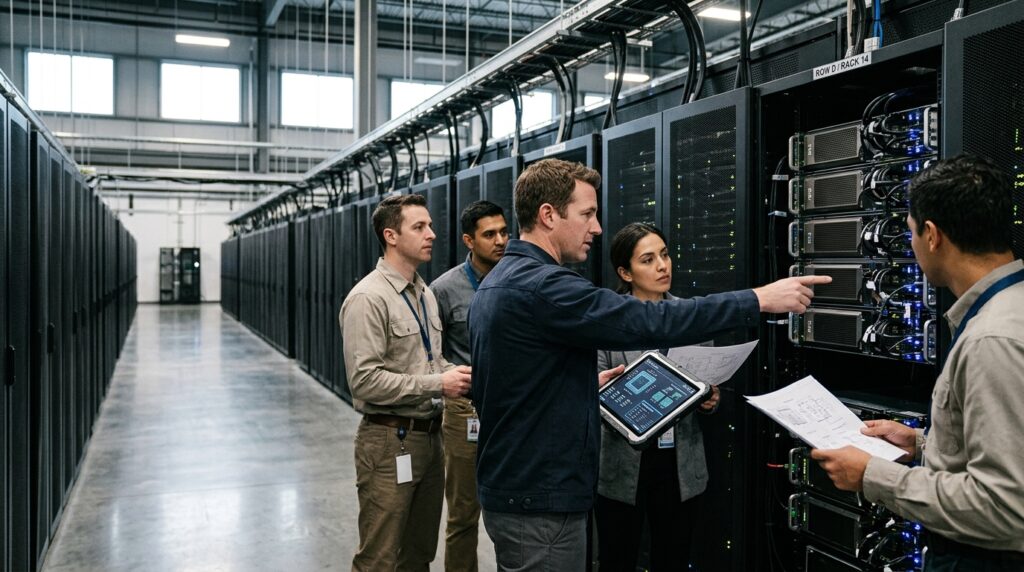
The Helios architecture is central to that effort. Rack-scale systems are designed to treat an entire rack of servers as an integrated AI computing unit, improving bandwidth, power efficiency and manageability. For hyperscale operators, such designs can be as important as raw chip performance because the constraints of large AI clusters often emerge at the system level: networking, memory, thermal management, software orchestration and energy use.
Meta’s decision also reflects the practical pressures facing AI companies. Demand for compute has outpaced supply for much of the generative AI boom. Companies that build their own data centers must secure not only chips but also land, electricity, cooling equipment, network capacity and construction timelines. In that context, long-term supplier agreements are becoming strategic infrastructure decisions rather than ordinary procurement deals.
The equity component may draw scrutiny because it resembles other recent AI infrastructure arrangements in which customers and suppliers link commercial commitments with financial incentives. Supporters argue such structures help align execution in a market where capacity must be planned years in advance. Critics may ask whether the circular nature of some AI investments could inflate expectations before revenue from AI products fully catches up with spending.
There are also execution risks. Custom chips must meet performance and efficiency goals. Data centers must be built or upgraded on schedule. Power must be secured in markets where grids are already under strain. Software compatibility must improve enough for developers to run workloads across multiple chip platforms without excessive friction. And Meta must ultimately show investors that AI infrastructure spending can translate into durable revenue growth, stronger engagement or higher productivity.
Still, the direction of travel is clear. Meta is signaling that AI compute is a strategic asset, not a commodity. AMD is signaling that it intends to compete at the highest tier of hyperscale AI deployments. Nvidia remains the incumbent leader, but the scale of the Meta-AMD agreement suggests that the AI chip market is entering a more complex phase, with multiple suppliers, custom designs and long-term power commitments shaping the competitive landscape.
For users, the deal will not be visible as a chip label inside Facebook or Instagram. Its impact will be felt indirectly: faster AI assistants, more personalized recommendations, new creator tools, automated advertising systems and possibly AI features embedded across Meta’s future devices and applications. For the technology industry, however, the message is immediate. The race to build AI is now also a race to secure energy, silicon and systems at a scale measured not in servers, but in gigawatts.