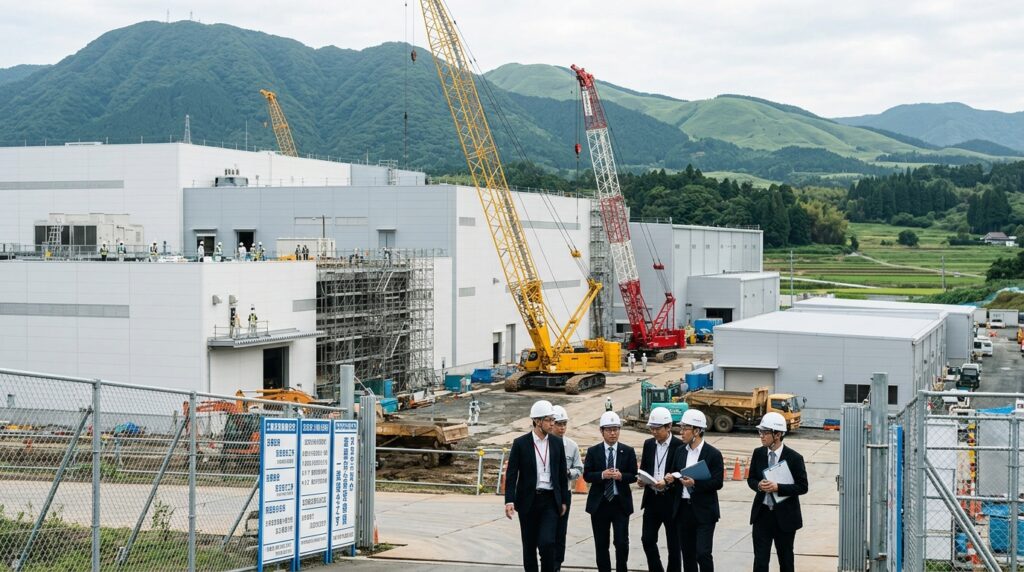
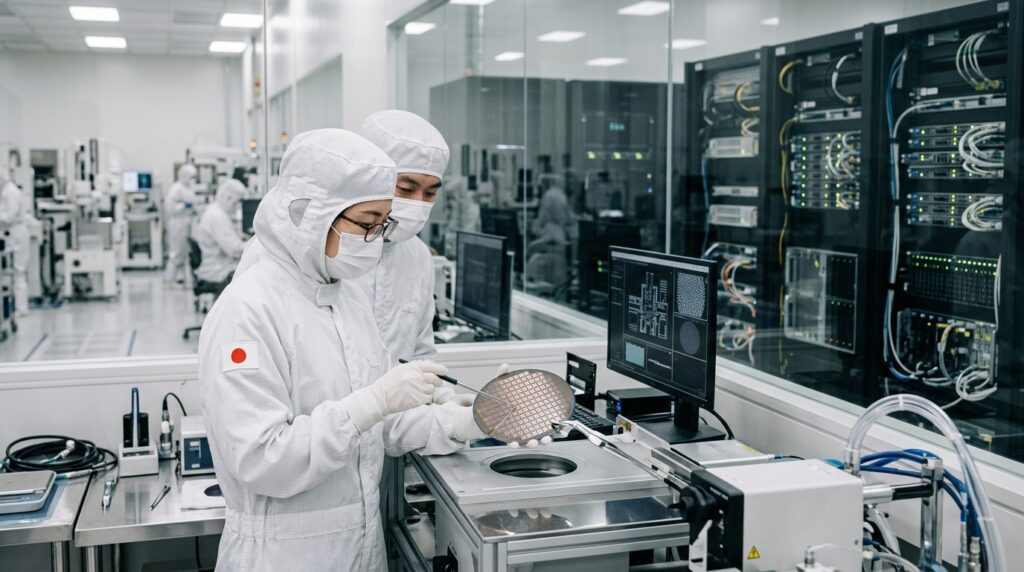
The Taiwanese chipmaker’s plan to produce advanced semiconductors at its second Kumamoto factory signals a deeper shift in Japan’s technology security strategy and the geography of AI supply chains.
TOKYO — Taiwan Semiconductor Manufacturing Co. plans to produce 3-nanometer semiconductors at its second factory in Kumamoto, Japan, a move that would give the country a foothold in one of the world’s most advanced classes of chipmaking and strengthen its position in the global race to supply artificial intelligence, robotics, smartphones and autonomous vehicles.
The announcement, made during a meeting in Tokyo between TSMC Chairman and Chief Executive C.C. Wei and Japanese Prime Minister Sanae Takaichi, marks a significant upgrade from earlier plans for the Kumamoto expansion. The second factory, now under construction, had previously been associated with less advanced process technologies. Japanese officials said the shift to 3-nanometer production would contribute to industrial development and economic security, two goals that have become central to Tokyo’s semiconductor policy.
TSMC told Reuters that it was planning to use 3-nanometer process technology at the second Japan fab to meet strong demand driven by artificial intelligence. Wei said the facility would support local economic growth and provide a foundation for Japan’s AI business, while Takaichi described the project as meaningful from the standpoint of economic security. The language from both sides reflected the increasingly strategic role of chips once seen mainly as commercial components but now treated by governments as critical infrastructure.
Three-nanometer chips are used in high-performance computing and premium consumer devices because they can pack more transistors into a smaller area, improving speed and energy efficiency compared with older generations. For AI systems, where power consumption and computing density are major constraints, advanced chips are especially valuable. They are also important for advanced smartphones, data centers, robotics and vehicles that depend on increasingly sophisticated onboard computing.
For Japan, the decision is more than an industrial upgrade. The country was once a dominant force in global semiconductors, but over several decades it lost ground in leading-edge logic manufacturing to Taiwan, South Korea and the United States. Tokyo has responded with an aggressive subsidy strategy, seeking to rebuild domestic chip capacity, attract foreign investment and reduce dependence on supply chains vulnerable to geopolitical shocks.
Kumamoto, on the southern island of Kyushu, has emerged as the centerpiece of that effort. TSMC’s first plant there began mass production in late 2024 and focuses on less advanced chips used in sectors such as automotive and industrial electronics. The second fab was originally expected to add capacity across nodes including 6- and 7-nanometer technologies. TSMC’s earlier plan for its Japan Advanced Semiconductor Manufacturing subsidiary, known as JASM, called for the Kumamoto site to provide more than 100,000 12-inch wafers per month when both factories are included, with more than 3,400 high-tech professional jobs expected.
The upgrade to 3 nanometers changes the scale of the project’s strategic importance. While TSMC already produces its most advanced chips primarily in Taiwan, and is also expanding in the United States, bringing 3-nanometer technology to Japan would deepen the dispersion of advanced manufacturing capacity among close U.S. allies. That distribution is increasingly viewed by policymakers as a hedge against disruption in the Taiwan Strait, natural disasters, export controls or sudden demand spikes from AI companies.
The investment figure has not been formally confirmed by TSMC. Japanese media reported that the project could rise to about $17 billion, while Reuters reported that TSMC declined to comment on that figure. Japan’s government has already committed large-scale support for the original Kumamoto expansion and said it would examine the updated plan after receiving details on investment size and the operational start date.
That caveat matters. Semiconductor factories are among the most complex industrial projects in the world, requiring extreme precision, highly specialized equipment, steady supplies of electricity and water, and a dense ecosystem of materials, chemicals, tools and skilled labor. Moving from a plan centered on older nodes to 3-nanometer production would likely require changes in equipment, process integration, cleanroom design and workforce preparation. The Japanese government’s Ministry of Economy, Trade and Industry said it would first ask TSMC for specific information before reviewing the revised proposal.
Even so, the political significance was immediate. Takaichi’s government has placed economic security at the center of its technology agenda, identifying semiconductors as a foundation for future growth and national resilience. AI, autonomous driving and robotics are not only commercial markets but strategic sectors that could define competitiveness in defense, manufacturing, energy and mobility over the next decade.
TSMC’s move also fits a broader global pattern. The company, the world’s largest contract chipmaker, has been expanding beyond Taiwan through projects in Japan, the United States and Europe. Customer demand for AI chips has surged as cloud providers, chip designers and device makers race to build systems capable of training and running increasingly powerful models. TSMC has said it expects strong AI-related demand to continue, even as some analysts warn that the scale of current investment could outpace near-term returns.
Japan’s partnership with TSMC is only one part of its semiconductor revival. The government is also supporting Rapidus, a domestic venture seeking to mass-produce advanced 2-nanometer chips with help from international partners. Rapidus remains a high-risk project because leading-edge manufacturing requires years of experience, deep capital resources and close collaboration with customers. By contrast, TSMC brings proven manufacturing scale, established process technology and relationships with major global chip designers.
The Kumamoto project has already reshaped the local economy. Suppliers, construction companies, universities and municipal planners have moved to support the emerging chip hub, while local communities have faced pressure from rising land prices, traffic and demand for skilled workers. Advanced chipmaking can generate high-paying jobs and attract suppliers, but it also places heavy demands on infrastructure and public planning.
For customers, producing 3-nanometer chips in Japan could offer a more geographically diversified supply option, though TSMC is unlikely to shift its most sensitive technologies abroad without careful coordination with Taiwanese authorities and major clients. The company’s global expansion has required balancing customer requests, host-government incentives and Taiwan’s desire to preserve its central role in advanced manufacturing.
The decision also underscores how AI has altered the semiconductor industry’s priorities. A few years ago, mature and specialty chips for cars, sensors and industrial equipment were the main rationale for expanding production in Japan. Those chips remain important, particularly for Japanese automakers and electronics companies. But the acceleration of AI demand has elevated the need for leading-edge logic chips capable of powering data centers, edge devices and intelligent machines.
The second Kumamoto fab is therefore likely to be watched closely by governments and competitors alike. If completed as planned, it would give Japan a role in manufacturing chips at a node central to the current AI boom. It would also show that Tokyo’s subsidy-driven strategy can attract not only mature-node capacity but advanced technology once concentrated in a smaller number of locations.
The challenges remain substantial. Costs are rising across the semiconductor sector, equipment lead times can be long, and demand forecasts for AI hardware are volatile. The exact investment amount, production timeline and output capacity for the upgraded Kumamoto plant still require further clarification. But the direction is clear: Japan is no longer seeking only to secure older chips for cars and industrial machinery. It is positioning itself inside the advanced semiconductor supply chain that will shape the next generation of AI-driven industries.
For TSMC, the decision reinforces its role as the indispensable manufacturer behind much of the world’s digital economy. For Japan, it is a chance to convert public subsidies, industrial policy and local investment into a more durable position in advanced manufacturing. And for the global technology sector, the Kumamoto upgrade is another sign that the AI chip race is not only about faster processors, but about where the world chooses to build them.
“””