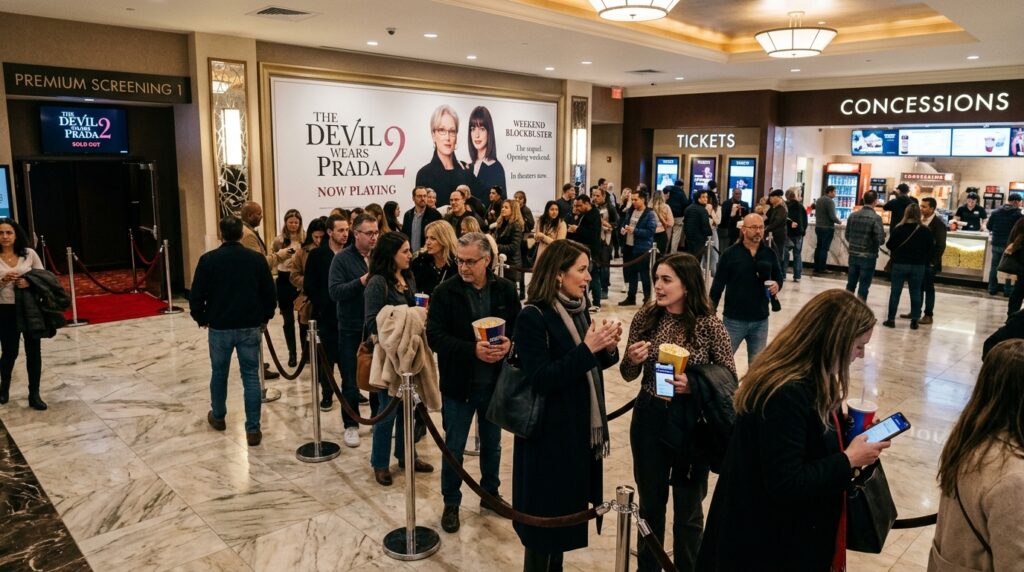
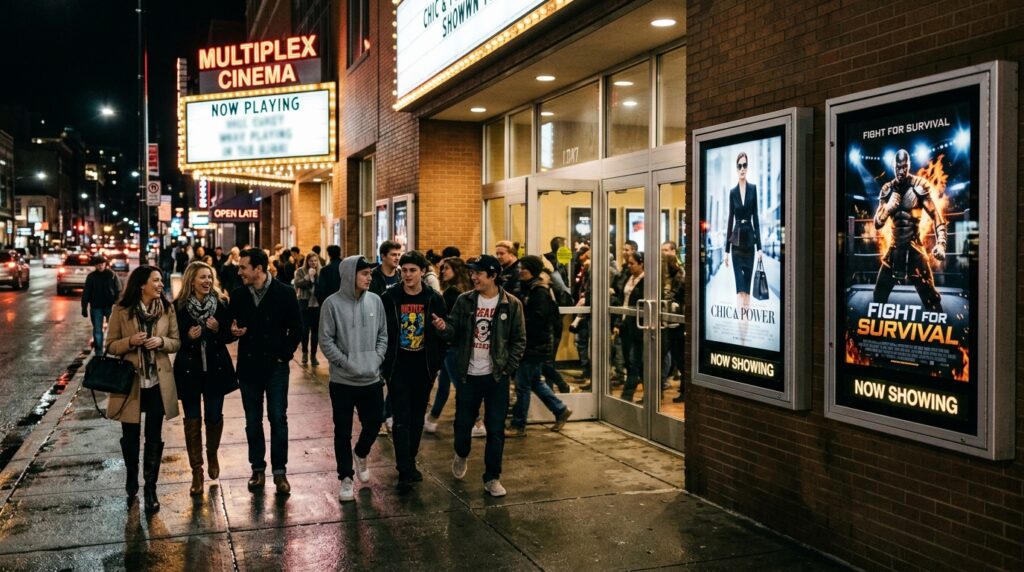
The fashion-world sequel held off the debut of “Mortal Kombat II” with an estimated $43 million weekend, underscoring the power of nostalgia, female-driven audiences and counterprogramming at the start of Hollywood’s summer season.
“The Devil Wears Prada 2” held the top spot at the North American box office over the weekend, narrowly beating the debut of “Mortal Kombat II” in a contest that paired two very different forms of franchise appeal: glossy fashion-world comedy and effects-heavy video game action.
According to studio estimates, the 20th Century Studios sequel earned about $43 million in its second weekend in U.S. and Canadian theaters. “Mortal Kombat II,” released by Warner Bros., opened with roughly $40 million, a solid start but not enough to unseat the returning comedy-drama. The result gave “The Devil Wears Prada 2” another weekend at No. 1 and confirmed that its opening surge was not a one-week nostalgia event.
The win was especially notable because holdovers usually face sharp declines after large debuts. Instead, “The Devil Wears Prada 2” fell by a comparatively modest margin from its opening weekend, suggesting strong word of mouth and repeat interest from audiences who had waited two decades to revisit Miranda Priestly, Andy Sachs and the high-pressure world of fashion media. Its timing over Mother’s Day weekend also appeared to work in its favor, turning the film into a group outing for older women, younger viewers and fans of the 2006 original.
The sequel has already become one of the early commercial success stories of the summer movie season. After 12 days of release, it has grossed about $433 million worldwide, including nearly $145 million in North America and more than $288 million internationally. That total has already surpassed the full global run of the original “The Devil Wears Prada,” which earned $327 million in 2006, not adjusted for inflation.
The original film, adapted from Lauren Weisberger’s novel, became a cultural reference point for workplace ambition, fashion hierarchy and the cost of professional reinvention. Its influence lasted far beyond its initial theatrical life, helped by cable reruns, streaming, fashion memes and the enduring popularity of Meryl Streep’s performance as the formidable editor Miranda Priestly. The sequel’s box office suggests that those associations remained unusually strong across generations.
In the new film, the appeal is not only nostalgia but also curiosity about how the characters fit into a changed media landscape. The magazine world that defined the first film has been transformed by digital platforms, influencers, shrinking print power and the merger of fashion, celebrity and technology. That gives the sequel a contemporary hook while preserving the workplace tensions and polished surfaces that made the original memorable.
For theaters, the performance is encouraging because it shows that adult-skewing studio films can still command major theatrical interest when they are eventized properly. Much of the post-pandemic box office recovery has depended on superhero films, animation, horror, premium formats and large-scale action franchises. “The Devil Wears Prada 2” offers a different model: a star-driven, female-led sequel built around character recognition, style and cross-generational appeal.
“Mortal Kombat II” still delivered a respectable opening. The film debuted in more than 3,500 North American theaters and drew heavily from the game franchise’s fan base. It added about $23 million internationally, bringing its global opening to roughly $63 million. For a martial arts fantasy sequel based on a long-running video game property, the domestic result showed that the brand retains theatrical strength.
But the film’s second-place finish also revealed the limits of fan-driven action openings when facing a broader cultural event. “Mortal Kombat II” skewed heavily male, while “The Devil Wears Prada 2” benefited from an audience profile that was almost the inverse. That contrast helped define the weekend. Rather than one film cannibalizing the other, the two sequels split the market along demographic lines, with the fashion sequel gaining just enough of an advantage to remain on top.
The weekend’s result also sharpened the conversation about counterprogramming. Hollywood often assumes that action spectacles dominate early summer. Yet the success of “The Devil Wears Prada 2” shows that audiences can respond strongly to films that feel distinct from the effects-heavy franchise cycle. Theatrical moviegoing still depends on urgency, but urgency can be created by cultural familiarity, character attachment and social viewing, not only explosions or visual scale.
That does not mean “Mortal Kombat II” failed. Its opening gives Warner Bros. a foundation to build on, especially if international markets remain steady and fans return for repeat viewings. The film also arrives at a time when video game adaptations have become far more reliable in Hollywood than they once were. What was once considered one of the industry’s riskiest genres has become a major source of recognizable intellectual property.
Still, the contrast between the two films is instructive. “Mortal Kombat II” opened like a conventional franchise sequel: front-loaded, fan-centered and dependent on awareness among players and genre audiences. “The Devil Wears Prada 2” is behaving more like a social phenomenon, sustained by viewers who may not rush out on opening night but continue buying tickets across the second weekend.
The rest of the chart reflected a marketplace with unusual variety. The Michael Jackson biopic “Michael” remained a major draw in third place with about $36.5 million in its third weekend. “The Sheep Detectives,” a family-friendly mystery comedy, opened in fourth with about $15.9 million. A Billie Eilish concert film rounded out the top five with about $7.5 million in North America. Together, the lineup suggested a healthier theatrical ecosystem than weekends dominated by only one genre.
For Disney, which distributes 20th Century Studios titles, “The Devil Wears Prada 2” adds momentum after a period in which studios have been under pressure to prove that established brands can be revived without exhausting audiences. The film’s strong domestic hold and international total indicate that the property traveled well, especially in markets where fashion, celebrity and Hollywood glamour remain potent selling points.
The performance may also influence how studios think about legacy sequels. Many revived franchises rely on action, science fiction or horror. “The Devil Wears Prada 2” demonstrates that comedies and dramas with iconic characters can also generate large-scale theatrical interest if the original remains culturally alive. The key is not simply recognition, but the feeling that the sequel has a reason to exist in the present.
There are risks in drawing too broad a conclusion from one hit. The film benefited from the return of beloved stars, a clean release window, a recognizable brand and a date that aligned with its audience. Other legacy sequels without those advantages may struggle. But the weekend’s lesson is clear: older properties can still feel fresh when they connect memory with a changed social moment.
For “Mortal Kombat II,” the path ahead will depend on how strongly it holds after its fan-heavy opening. Action sequels often face steep second-weekend drops, especially when reviews are mixed and early viewers represent the most committed audience. The film’s domestic opening gives it visibility, but its long-term success will require broader turnout beyond the core fan base.
For “The Devil Wears Prada 2,” the question is no longer whether audiences cared enough to return. They did. The question now is how high the film can climb globally and whether its performance will encourage studios to revisit other adult-oriented hits from the 2000s with the same care. At a time when Hollywood is searching for dependable theatrical formulas, Miranda Priestly has once again proved difficult to dismiss.
The weekend ended with a narrow numerical victory, but the symbolism was larger. A fashion sequel in its second weekend beat a new video game action film at the start of summer. It was a reminder that the box office is not governed by genre assumptions alone. Audience appetite can shift quickly, and sometimes the sharpest weapon in a franchise battle is not a fatality, but a perfectly timed entrance.