The franchise’s first top selection since John Wall in 2010 gives Washington a rare chance to accelerate its rebuild in a draft class led by several high-profile college prospects.
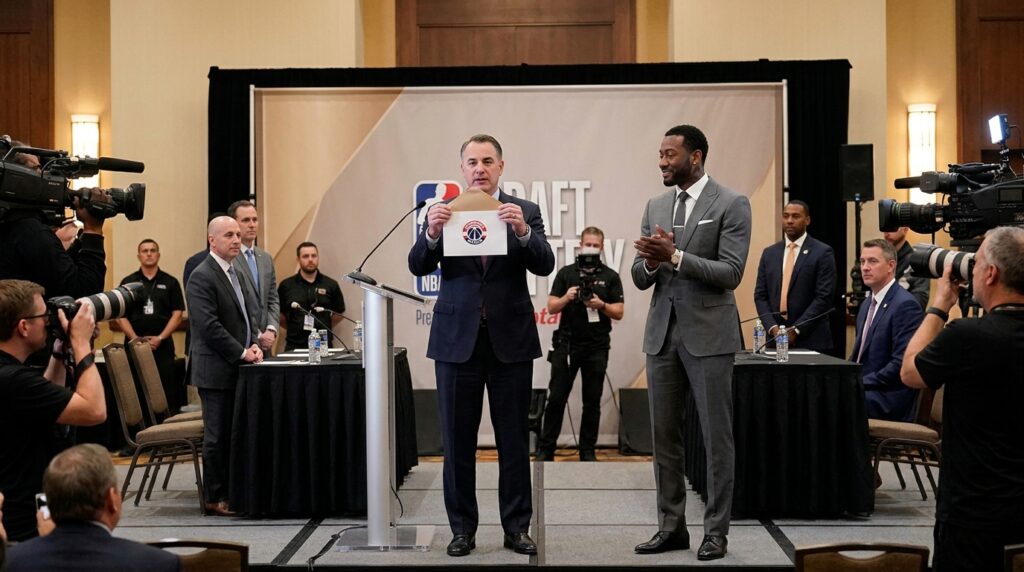
CHICAGO — The Washington Wizards won the 2026 NBA Draft Lottery on Sunday, securing the No. 1 overall pick and a potentially franchise-altering opportunity after finishing the season with the league’s worst record.
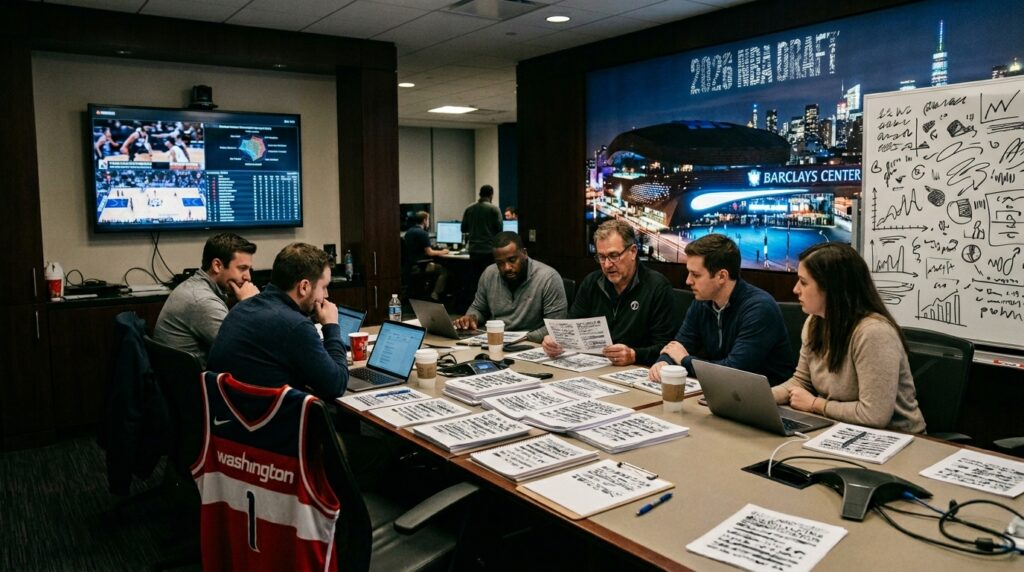
The result gives Washington the first selection in the NBA Draft’s opening round on June 23 at Barclays Center in Brooklyn, where the Wizards will have the power to choose from a group of prospects widely viewed as one of the strongest at the top of the draft in recent years. For a franchise that has spent several seasons in a painful rebuild, the lottery victory offered a rare public moment of relief.
Washington entered the drawing with a 14% chance to win the No. 1 pick, tied with the Brooklyn Nets and Indiana Pacers for the best odds. The Wizards had gone 17-65, a record that reflected both the scale of their roster overhaul and the difficulty of maintaining competitiveness while trying to build toward a longer-term core. The lottery rewarded that position, delivering Washington its first No. 1 pick since 2010, when the franchise selected John Wall.
The symmetry was hard to miss. Wall, the former Wizards star who became the face of the team’s last sustained competitive era, represented Washington on stage at the lottery. His presence gave the night a link between the franchise’s past and its next attempt to construct a contender. Inside the sealed drawing room, Monumental Basketball president Michael Winger watched as the combination that delivered the top pick emerged before the televised reveal.
For the Wizards, the No. 1 pick does not solve everything. It does, however, change the terms of the rebuild. Washington now controls the top of the board in a draft expected to include BYU forward AJ Dybantsa, Duke forward Cameron Boozer, Kansas guard Darryn Peterson and North Carolina forward Caleb Wilson among the leading candidates. Each offers a different version of star potential, and the next six weeks will become a test of Washington’s evaluation process as much as its luck.
The organization has tried to reshape its roster and its culture after years of drifting between late-playoff ambition and lottery reality. The result has been difficult basketball, thin margins and a fan base asked to tolerate losses in exchange for flexibility. Winger framed the lottery win as a reward for supporters who stayed with the team through a deliberate teardown, and that message matters in a city where patience has often been strained.
The top pick also raises expectations immediately. A rebuilding team can ask for time when it is collecting assets and developing young players. A team with the No. 1 selection faces a different standard. The choice becomes a public verdict on scouting, medical evaluation, player development philosophy and organizational courage. Washington must not only identify the best prospect but also build the conditions that allow him to become a cornerstone.
The options are compelling. Dybantsa has been viewed by many scouts as a dynamic wing with scoring instincts, size and adaptability. Boozer brings production, polish and basketball lineage after a dominant freshman season at Duke. Peterson offers lead-guard creation and shot-making, while Wilson gives the class a high-upside frontcourt option with size, efficiency and two-way potential. The Wizards will have private workouts, interviews, medical files and internal debates before they make a final decision, but the lottery has made one thing certain: no other team can take their preferred player first.
Utah will pick second, Memphis third and Chicago fourth, while the LA Clippers landed the fifth pick through a trade with Indiana. Brooklyn fell to sixth, Sacramento will pick seventh, Atlanta eighth through New Orleans, Dallas ninth and Milwaukee tenth. The order created winners and losers beyond Washington, but the night’s central story was the Wizards’ move from worst record to first choice.
The lottery system is designed to discourage certainty, and Washington’s win was not guaranteed despite its poor season. Under the current format, the three worst teams share the same 14% chance at the top pick, reducing the incentive for any one club to race to the bottom. The Wizards could just as easily have fallen to fifth, a result that would have extended the frustration around the rebuild and narrowed their access to the draft’s highest tier.
Instead, Washington now enters the draft process from the strongest possible position. The team can select a player, listen to trade offers or use the pick as leverage in broader roster planning. In most years, trading the No. 1 pick is unlikely unless a team sees comparable value in several players or receives a massive package. For Washington, the more probable path is to choose a player who can become the new face of the franchise.
That player will enter an environment that has changed significantly. The Wizards have been linked to a more ambitious roster direction after adding established stars, but the franchise still needs youth, defense, shooting and long-term continuity. A No. 1 pick gives Washington a premium rookie contract, a marketing centerpiece and a potential bridge between veteran talent and future development.
The emotional effect may be just as important as the technical one. NBA rebuilds can become abstract exercises in cap space, pick swaps and probability tables. Fans experience them differently: through empty seats, lopsided losses and the uncertainty of whether the pain will produce anything meaningful. A lottery victory offers a clean storyline, something tangible to believe in before a player has even been selected.
For Wall, the night carried added resonance. His selection in 2010 brought energy, speed and identity to Washington, eventually helping the Wizards become a credible Eastern Conference playoff team. The franchise never reached the heights it hoped for during that era, but it had a recognizable star and a competitive shape. The 2026 pick gives Washington another chance to create that kind of foundation, though the league around it has changed dramatically.
Today’s NBA demands more from young stars than ever. Top picks are expected to score efficiently, defend across positions, process complex coverages and adapt quickly to spacing-heavy offenses. Teams also face pressure to manage development without damaging confidence. The Wizards’ next challenge will be to avoid treating the No. 1 pick as a savior while still giving him the responsibilities needed to grow.
The draft will unfold across two nights for the third straight year, with the first round on June 23 and the second round on June 24. Washington’s focus will be on the opening selection, but its broader draft board still matters. The franchise also holds later assets that could help add depth around the top pick. For a team at the bottom of the standings, one choice is rarely enough.
The lottery result also comes at a moment when the NBA is evaluating possible changes to the lottery structure. League officials have discussed reforms aimed at further reducing incentives for losing, including altered odds and a possible expansion of the lottery field. If the current system changes, Washington’s win may be remembered as one of the final major outcomes of this format.
For now, the Wizards have what every rebuilding team wants: control. They do not need another team to pass on their target. They do not need the board to break their way. They can choose the player they believe most capable of changing the franchise’s direction.
The hard part begins immediately. Lottery luck can open the door, but it does not build a winner by itself. Washington must turn a ping-pong ball victory into scouting conviction, player development and roster balance. On Sunday in Chicago, the Wizards won the right to dream again. On June 23 in Brooklyn, they must decide who carries that dream into the next era.
“””