
Across thousands of kilometers, brutal mountain passes, tactical battles and Europe’s most famous roads, the Tour de France remains a test of endurance as much as speed.
The Tour de France is often described as a bicycle race, but that definition feels too small for an event that asks riders to endure three weeks of physical pain, tactical discipline and psychological pressure across some of Europe’s most punishing terrain. It is a sporting contest, a moving festival, a national ritual and a global television spectacle all at once.
Every summer, the Tour turns roads, villages, mountains and city boulevards into a temporary arena. Riders pass through landscapes that shift from coastal roads to wheat fields, from medieval towns to Alpine switchbacks, from quiet valleys to roaring mountain crowds. The winner is not simply the fastest cyclist on one day. He is the rider who survives the accumulated damage of the entire journey and reaches Paris with the lowest total time.
The distance alone explains part of the race’s reputation. Modern editions usually cover more than 3,000 kilometers over 21 stages, with only two rest days. That means riders must compete almost every day for three weeks, recovering at night, eating constantly, sleeping under pressure and waking to do it again. A single Grand Tour stage can be difficult; the Tour de France asks athletes to repeat that effort until fatigue becomes a permanent condition.
But the Tour is not hard only because it is long. It is hard because the terrain changes the race every few days. Flat stages favor sprinters and their high-speed lead-out trains. Hilly stages reward attackers and versatile riders who can suffer over repeated climbs. Time trials expose each rider alone against the clock, without teammates to shelter them from wind. Mountain stages in the Pyrenees and Alps often decide the race, forcing contenders to confront gradients, altitude, heat, cold and the simple fact that the body has limits.
The mountains are where the Tour becomes myth. Climbs such as Alpe d’Huez, Col du Tourmalet, Mont Ventoux, Col du Galibier and Col d’Izoard are not merely roads. They are chapters in cycling history. Their names carry memories of attacks, collapses, heroic recoveries and crowds pressed so close to the riders that the road seems to narrow into a tunnel of sound. A rider who wins on one of these climbs does more than take a stage victory. He enters the race’s folklore.
Alpe d’Huez is perhaps the most theatrical of them all. Its 21 hairpin bends have become symbols of the sport, each turn bringing riders closer to a summit that can feel both near and unreachable. Fans from across Europe camp for days along the road, painting names on the asphalt and turning the mountain into a carnival of flags, smoke, costumes and noise. For riders, that atmosphere can be inspiring or suffocating. There is nowhere to hide when a climb is famous.
The Tour’s suffering is individual, but its strategy is deeply collective. Cycling is unusual because one person stands on the top step of the podium while an entire team often sacrifices itself to put him there. The leader may wear the yellow jersey, but his teammates protect him from wind, bring bottles, chase breakaways, control the pace, guide him through dangerous corners and sometimes give up their own chances completely.
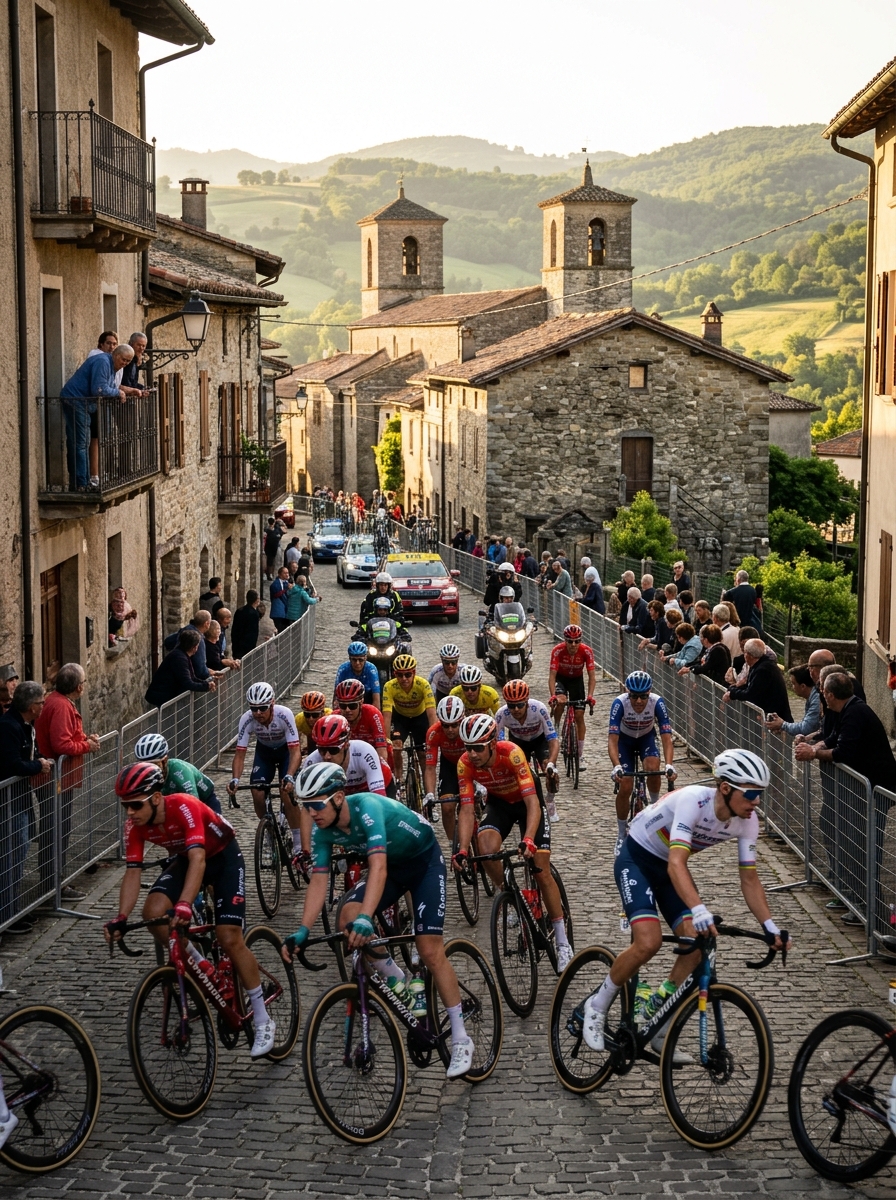
These supporting riders are known as domestiques, and they are central to the Tour’s drama. A domestique may ride at the front for hours, burning energy so the team leader can remain sheltered in the peloton. In the mountains, a strong climbing teammate can set a pace so hard that rivals begin to crack. On flat roads, teammates form a protective wall against crosswinds. In a crash or mechanical problem, a teammate may even give his bicycle to the leader and wait for a replacement. The public may remember the champion, but inside the race, victory is understood as shared labor.
Team tactics can be subtle. A squad may send a rider into an early breakaway not because it expects him to win, but because he can later help the leader on a climb. A team may slow the race to conserve energy or accelerate suddenly to split the peloton in crosswinds. Sprinter teams calculate when to catch breakaway riders so their fastest man can contest the finish. General classification teams count seconds, rivals and energy with ruthless precision. The Tour is a chess match played at 50 kilometers per hour.
Endurance is not only about legs and lungs. Nutrition can decide a race. Riders must eat and drink constantly, even when their stomachs rebel. Dehydration, hunger and low blood sugar can destroy months of preparation in minutes. A contender who forgets to fuel before a major climb may lose the Tour not because he lacks courage, but because his body runs out of usable energy. Modern teams employ nutritionists, physiologists, data analysts and performance directors, yet the fundamental truth remains old-fashioned: the rider must keep pedaling when every part of the body asks to stop.
Weather adds another layer of danger. The Tour can bring scorching heat on exposed roads, freezing rain in the mountains, sudden storms, slippery descents and unpredictable wind. A descent after a high mountain pass requires technical courage and judgment. Riders may reach speeds that would frighten most people in a car, while wearing only a helmet and thin racing kit. One mistake can end a season. The Tour rewards bravery, but punishes recklessness.
The jerseys give the race multiple stories at once. The yellow jersey represents overall leadership and is the central prize. The green jersey rewards consistency in the points classification, often favoring sprinters. The polka-dot jersey honors the best climber, while the white jersey recognizes the leading young rider. These competitions allow different types of athletes to chase different forms of glory. A sprinter may have no chance of winning the overall race but can become one of its central figures by dominating flat finishes. A climber may animate the mountains without threatening the final podium. The Tour is one race, but it contains many races inside it.
The route is also part of the Tour’s identity. Unlike stadium sports, the field of play changes every year. The race visits different towns, regions and sometimes countries beyond France, turning geography into narrative. A Grand Départ outside France can showcase another European city before the peloton returns to French roads. The final arrival in Paris remains one of sport’s iconic images: exhausted riders entering the capital, the winner secure, sprinters preparing for one last battle, and the Champs-Élysées becoming a ceremonial finish line.
Europe gives the Tour its texture. The race is not staged on anonymous highways alone. It passes vineyards, castles, river valleys, ski resorts, war memorials, seaside towns and mountain villages where local residents wait hours for seconds of action. For many viewers, the Tour is both sport and travel documentary. Helicopter shots show landscapes as much as tactics. The race sells endurance, but it also sells place.
That combination explains its commercial power. Sponsors value the Tour because it offers daily exposure across multiple markets. Broadcasters value it because every stage creates live drama and scenery. Host towns value it because the race brings attention, tourism and prestige. Bicycle brands, nutrition companies, clothing makers, car sponsors and technology firms all use the Tour as a stage. Few sports events can turn a mountain road, a team bus and a bottle handoff into global advertising inventory.
Yet the Tour’s appeal remains rooted in human vulnerability. Fans watch because even the strongest riders can suffer visibly. A champion can look unbeatable one day and broken the next. A crash can change everything. A young rider can discover courage. A veteran can fight for one final victory. A domestique can become a hero by saving a leader on a terrible day. The race is long enough for character to reveal itself.
That is why the Tour de France endures. It is not merely about speed, technology or celebrity. It is about resistance over time. The riders cross Europe’s famous roads not as tourists, but as exhausted witnesses to their own limits. They climb mountains that seem designed to break them, follow tactics that demand obedience, and chase seconds that can define careers. By the time the peloton reaches Paris, the winner has not conquered the Tour so much as survived it better than anyone else.
“””
